No Charge for the Crossing
Page 37 of 219
Chapters
“There’s eleven more of me behind me.”
He looked past her. At the bend in the lane a downpipe jutted from the wall at shoulder height. Two people could pass there if one turned sideways. Twelve people turning around would have to get past whoever was still coming down. On Saturday almost everyone had arrived together. He had counted that as evidence of good timing, not luck.
“I can get someone out to the road,” Nella said, still on the far side. “They can send people on when you’re ready.”
“That’s another person to pay.”
“Or it’s me, and I don’t get to be on the boat laying out the flowers.” She rested a forearm against the gate. “I’d rather move flowers than twelve people.”
From where he stood, the chalk waiting box looked generous. He had drawn it with nobody in it. Now he could picture a row of people looking down at the clean concrete just as he was doing and wondering what possible reason he had for making them stand outside.
He opened the gate and waved her back through. “Come and tell me when you’d send them down.”
Nella returned to the workshop end while he fetched the low trolley he used for shifting stock. It was empty except for a length of scrap cedar laid across its bed. The cedar stuck out just far enough to make the turn awkward. He pulled the trolley past the waiting box and left it with one wheel over the chalk line.
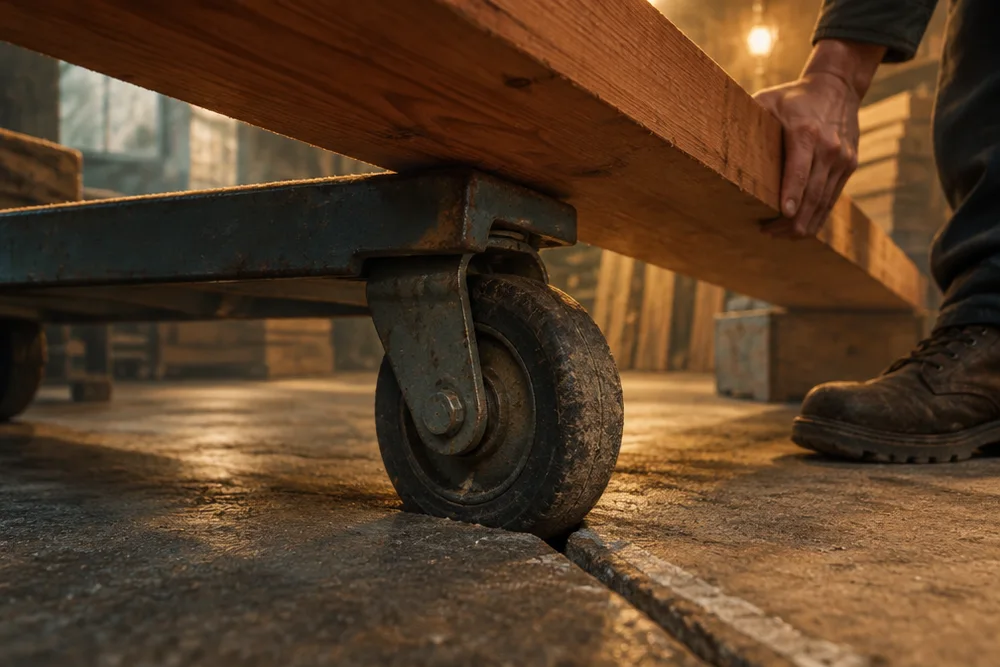
“That’s not clear,” she said.
“No. But someone at the gate can stand there and think it will be in a second.”
He took the handle again. The loose wheel swung crosswise and caught in the joint between two slabs. He knew how to free it. He had done it so often he no longer broke stride: ease back, lift the handle, give the wheel room to swing. This time he left it stuck. Nella glanced up at the gate.
“I can hear you saying ‘nearly,’” she said.
“I haven’t said anything.”
“You used to say it when I came to collect you.”
When they had a table booked, she meant. He would go on with whatever was under his hands until she came into the shop in her good shoes. She always liked to see what he’d made, which gave him another few minutes if he knew how to use them. He remembered pulling a dust sheet off a finished tiller just to watch her run the pads of her fingers along the curve.