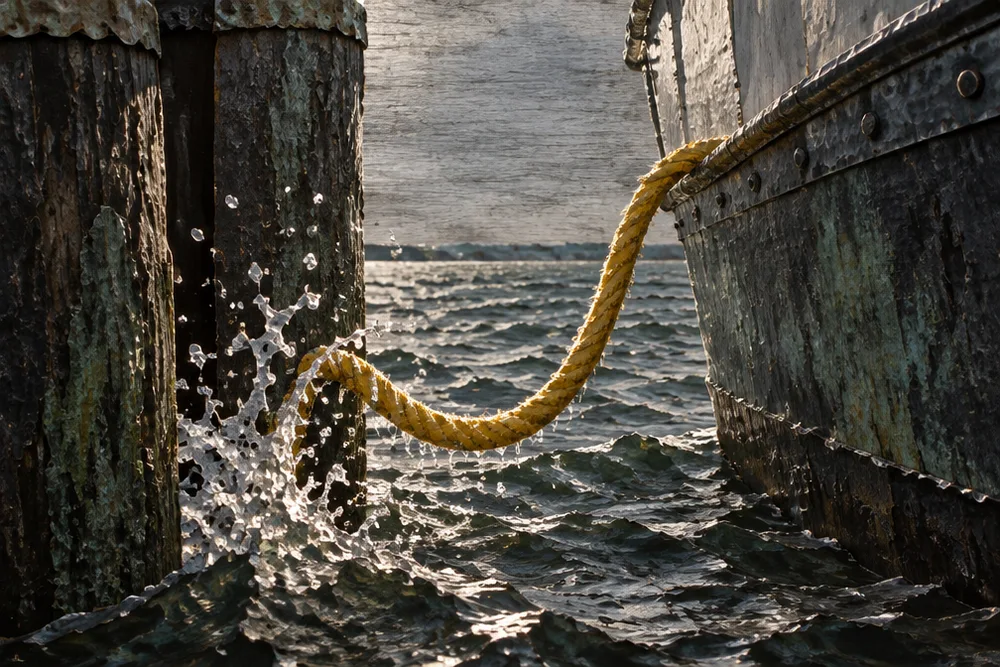
Mussel Boats at the Upstairs Landing
Page 35 of 245
Chapters
“Tomas,” the chair said. She held out a sheet. “This records your statement. Read it before you sign.”
He took the page. The writing was careful: I, Tomas Ruskell, formerly ferryman of Bellwick, state that the public ferry route was retired, but that boats have continued to use the drowned quarter cut in the years since. He read it twice. The sentence did not say that he had removed the markers. It did not say he had known the route remained in use. It said only what he had promised to testify.
“Add that I removed the markers,” he said.
The chair picked up her pencil. “You want that in?”
“Yes.”
Nera watched him from beside Mera. Tomas heard the pencil scratch as the chair added the words. It seemed important that his account include the part that made him look careless, or worse. A statement that named the traffic but not the reason he had failed to see it would let him keep his old shelter of half-truths.
He signed beneath the correction. His signature wavered at the end, where his wrist had begun to tire. The chair blotted the ink and put the paper beside the ballot stacks.
“I’ll give this to the meeting record,” she said.
“Good.”
Nera picked up her tool bag. “I’m going.”
“I’ll bring the ferry around,” Tomas said.
She looked as if she might object that the choice had nothing to do with him. Instead she said, “The tide’s turning.”
“I know.”
They started for the door together. Behind them, Mera resumed stacking ballots, each sheet squared against the next. The harbor plan rustled once more in the draft, its brass weight keeping it flat. Tomas left the marker on the table for the moment. He had no claim to carry it away now that its story belonged to the village.
The wind had freshened by the time they reached the slip. Water slapped at the landing posts, lifting and dropping the yellow mooring line. Tomas untied the ferry while Nera stood on the boards, looking toward the drowned quarter. From the hill, the old house and tower were hidden behind the nearer roofs. The channel lay out of sight, but the tide was audible in the hollow between buildings.
“If the crews are still there, we’ll need to pick them up before the shortcut gets too lively,” he said.
“I know.”
“And if it’s too far gone, we turn back.”