Mussel Boats at the Upstairs Landing
Page 171 of 245
Chapters
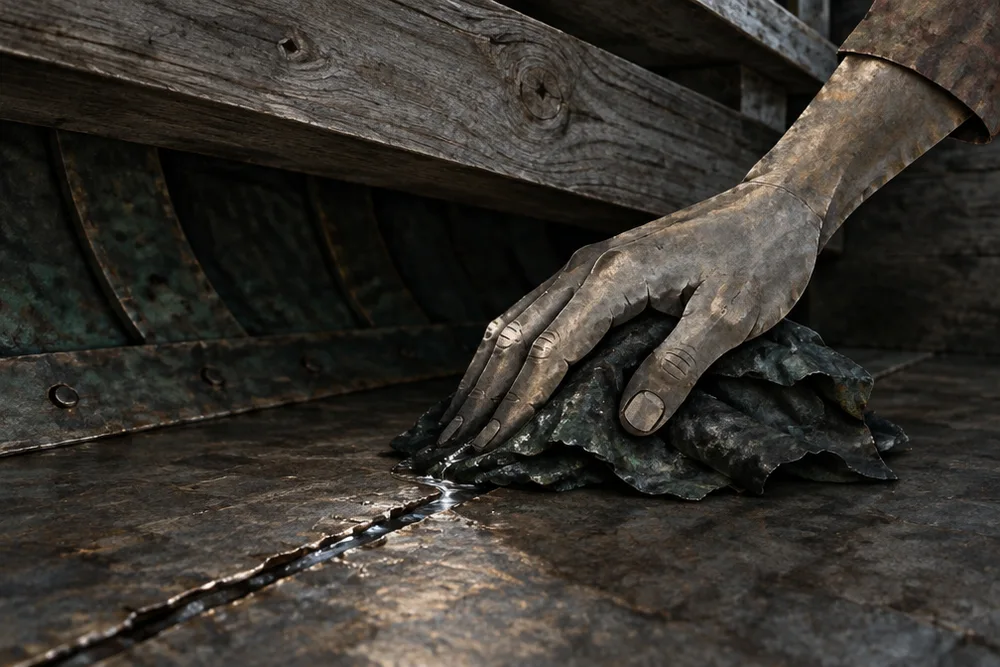
He pushed off to meet them. The water at the mouth of the cut had gone darker, its surface wrinkled where the current pressed over the submerged sill. Iven saw him coming and turned his boat just enough to keep the bow toward the open channel. The other crews followed, not quite a line, but close enough to show they had heard the signal. “Tomorrow,” Tomas called. “First barge, then you. Posted schedule at the slip.” “Tomorrow’s a different tide,” Iven called back. “Yes.” “And we’re still out a market run.” “Yes.” Iven held his gaze for a beat, then looked away. He did not thank Tomas, and Tomas was glad he did not. The loss belonged to the crews. No schedule could take it back, and no story about careful piloting should be used to disguise it. Tomas waited while the six boats crossed the channel mouth. He did not guide them; they knew the water there better than he did. One skipper kept a hand on the tiller and called the depth to the boat behind. The crews made room for one another without asking the barge to yield again. On the far side, the boats turned toward the quarter, their dark hulls moving between the submerged walls. At the slip, Sella had nailed a board to a post. She wrote the first day’s schedule in block letters, then added a line below it: IF THE CURRENT SETS HARD, WAIT. The ink blurred where a fleck of spray struck the page. She covered it with a strip of glass salvaged from a broken lantern. Tomas tied up and stayed in the ferry, listening to the rope creak against its cleat. Behind him, the workmen rolled stone onto the cart road. Ahead, the cut narrowed between its old banks, still open, still difficult, and no longer something the builders could treat as empty. He had agreed to testify that traffic continued. He would have to testify now to what continued traffic cost. The crews had surrendered their market run, and the wall crew had lost a tide. Tomorrow they would take turns again, slower than either wished. It would be called a delay in the work account. On the water, it would mean that the passage had been left for someone besides the stones. Tomas bent to inspect the seam beneath his thwart. A thin thread of water stood there, shining in the ferry’s shadow. He pressed a rag against it and felt the damp spread through the cloth. The boat would need a new plank before the next loaded crossing. The builders had their delay; he had his repair. Neither could be put off much longer.