Mussel Boats at the Upstairs Landing
Page 162 of 245
Chapters
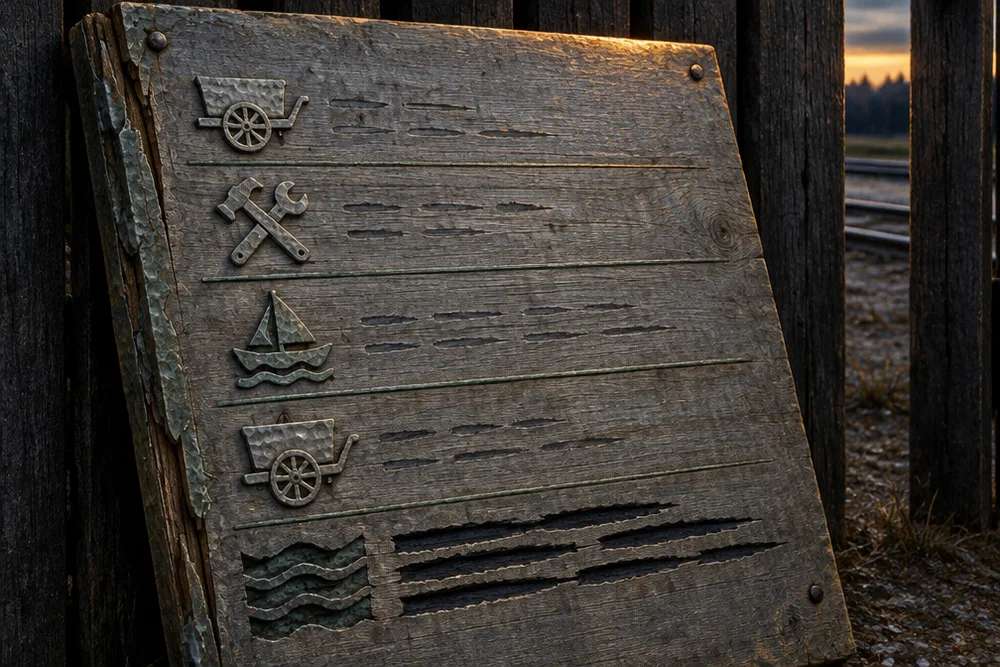
Iven appeared at the gate just before dark, carrying a wooden board. “A schedule,” he said. The board had four lines scratched into it: morning carts, repairs and lifts, afternoon passage by agreement, dusk carts if the channel allowed. “We’ll hang this where the crews can see it. If the water won’t permit a dusk run, you tell us before we roll down.”
“I’ll do that.”
“And if your repairs overrun?”
“I tell you before the hour begins.”
“Not after.”
“Before.”
Iven set the board against the fence. Its edges were rough and one corner was split, but the words were legible. Nera took her pencil and added: NO CARTS DURING A LIFT. She pressed hard enough to score the wood beneath the graphite.
“You’ll need a better sign,” he said.
“When the yard earns one.”
He examined the repaired runner. “That boat will float.”
“That’s the intention.”
“And your customer?”
“Went to Darr’s.”
Iven’s mouth tightened. “The crews can pay for crossings. They can’t replace every repair job you lose.”
“I know.”
“I’m not asking you to carry the whole cost.”
“Good.” She picked up a rag and wiped pitch from her palms. “Because I can’t.”
For a moment, neither spoke. The light drained from the yard; the fence and tools turned into flat dark shapes. Beyond the roofline, Bellwick’s lamps came on one by one. The village had voted to leave a passage in the wall. They had not voted to make the passage easy, or to restore the berths displaced by it. That work had become a series of narrow agreements between people who had reasons to refuse each other.
“I’ll tell the families the first crossing is at morning turn,” Iven said. “They’ll decide whether to bring the carts.”
“All right.”
He left the board propped beside the gate. At the road, he turned back. “If they decide not to, that isn’t all on you.”
Nera found no answer that sounded honest. She went instead to check the cradle pin, pressing the steel with her thumb until it stopped rocking. The skiff’s split runner was braced, the yard track remained open, and the chalk hours had not yet been tested by a full day’s work.
She had collected a crossing fee. She had lost a customer. Tomorrow would show whether one could pay for the other.