Mussel Boats at the Upstairs Landing
Page 147 of 245
Chapters
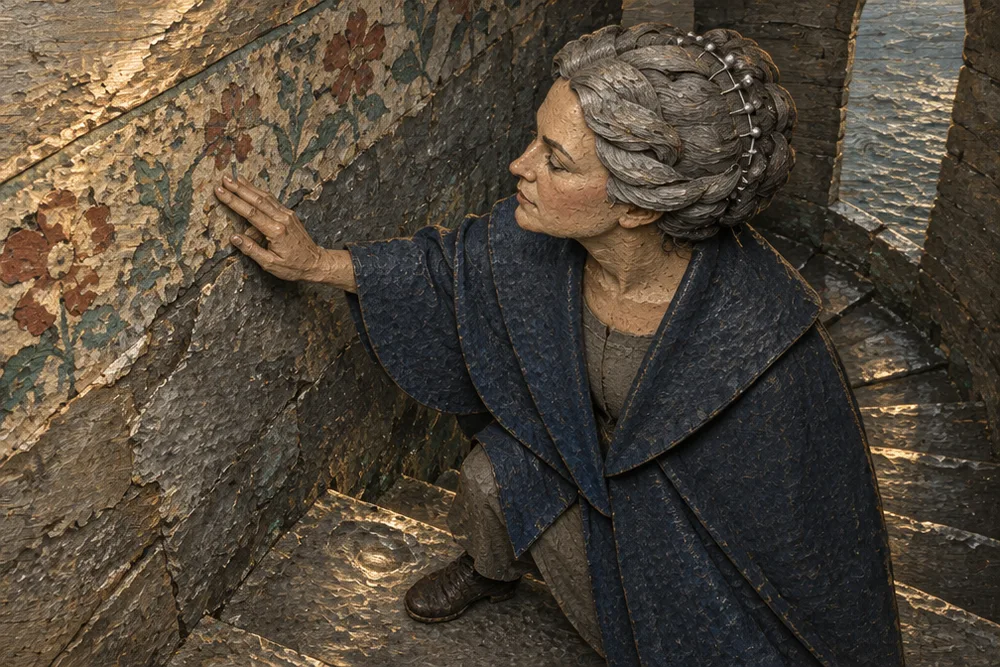
The tide was falling when they set out. Nera took the little ferry’s bow line, and Tomas Ruskell pushed them off with a long oar. The old man’s plum reefer was buttoned to his throat; his white nape braid showed below the collar. He steered with one shoulder lower than the other, eyes fixed on the drowned lane where the water covered the old paving stones. Mera sat amidships, holding a coil of rope against her paneled skirt. She had not asked Nera why the skippers had come to the yard. Nera had not volunteered. The silence between them made the ferry seem narrower. At the tower, the upper landing showed above the water like a broken fence. Fresh mooring ropes looped through iron rings in the brick, the fibers still pale where they had been cut and tied. One boat’s stern nudged the wall below. Its crew had left a mussel basket in the bow, packed with wet shells that smelled of salt and mud. Tomas secured the ferry to a rung. “Don’t put weight on the outer rail,” he said. “It’s been leaning since before I stopped running the public boat.” Mera looked toward him. “You stopped running it when they ended the route.” “When the route ended, the committee had me take the marks out.” He glanced at Nera. At the vote he had asked them to put that in writing. Mera looked at the landing where the ferry was tied, then turned her attention to the stair. Nera climbed first. The stair was steep and damp, its stone worn into shallow scoops. At the top, she pulled herself through a doorway whose lower half had been gnawed away by water. The room beyond had once been a parlor. Plaster hung in soft strips from the ceiling. A plank bridge crossed to the tower’s inner stair, and the six families had made the room their landing: hooks for coats, a rack of spare oarlocks, a tin cup nailed beside a jar of nails. Mera came up carefully, testing every tread. She touched the wall where a faded strip of painted flowers survived above the waterline. “You kept the bell key here,” Nera said. “Until the floor began to sag.” Mera’s fingers rested on the plaster, then withdrew. “It was a good house once.”