Love in the Offcuts
Page 140 of 161
Chapters
Marek cut the legs, planed the top boards, and set up a dry fit on the bench. The first platform sat level. The second rocked. He checked the corners, the floor, the bench, and then the joints. A knot had split the grain at the back edge; under the weight of a bowl it would hold, but a display stand was meant to be handled, and a promise of sound work ought to mean more than technically adequate. He dismantled the frame and replaced the rail. It cost him an hour and a board he had meant to save for the counter.
At noon, a message from Leonie waited on his phone. She had made the first venue on tour; the wardrobe room was barely wider than the ironing board, she wrote, and the kettle had to live under a rack. Then: The case fits beneath a seat if nobody sits on it. I have not tested that part. He smiled before answering. He asked whether the kit had arrived intact and whether she wanted a call after her evening show. She said she would let him know when she had the timetable in front of her. No promise, no apology for not making one. He respected the sentence, even as he wished it had ended with a time.
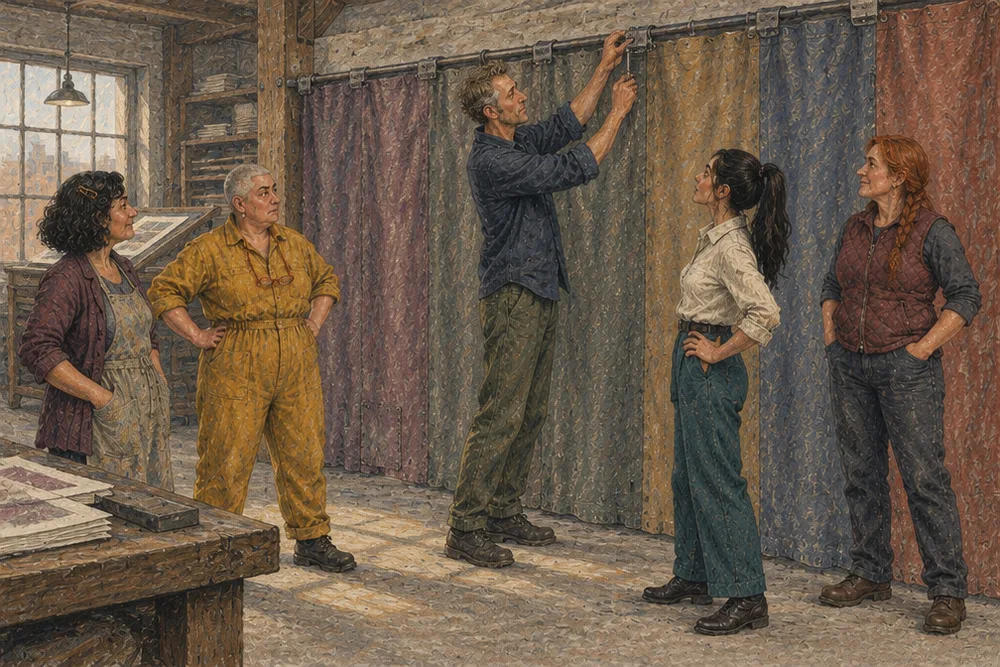
The replacement rail took more work than the original. Marek cut a fresh piece, planed it true, and checked its length against the old track twice. The bay’s fabric lay folded nearby, its stitched joins visible where the colors changed. He had thought of the shop as a room he could fill with the things he had made. Now he understood it would also be a room that had to work for people doing different jobs at once. Leonie’s gift could divide the long space without sealing it. Light would pass through the cloth in the afternoon; a customer could hear the saw from the front but would not have to watch a fitting in progress.
He fixed the brackets into studs and lifted the track into place. The first attempt bound halfway along. He stepped back, tipped his head, and watched the rail. The support at the middle sagged by a finger’s width. A small adjustment to the bracket freed the rollers. The curtain slid to the far end with a soft rasp, then came back without a jerk. Marek moved it again, slower. He had learned at the theater that a mechanism could appear to work for an audience and still fail the instant someone depended on it. He tried it a dozen times, then set the stop so the panel could not come off the rail if a customer tugged too hard.