Laundry Uphill, Dinner on the Mainland
Page 63 of 224
Chapters
“Maybe they’ll find a price they can manage. Maybe they won’t. You can’t make that decision for them by hiding your own cost.”
Fern watched him for a moment. His face had the patient stillness of someone who knew when another person needed time to arrive at an answer. She could have asked him to tell her what to do. She did not.
At the shop, the new rate card would be waiting in the window. In the morning someone would read it and decide whether to leave a basket. Fern would have to hear the answer. She stood and brushed the dust from her trousers.
“You asked what I intend to pay myself,” Fern said. “I intend to put the hours in the statement. Then I’ll see what’s left.”
Calder pushed himself upright. “That’s an answer.”
“It’s a first answer.”
“Those count.”
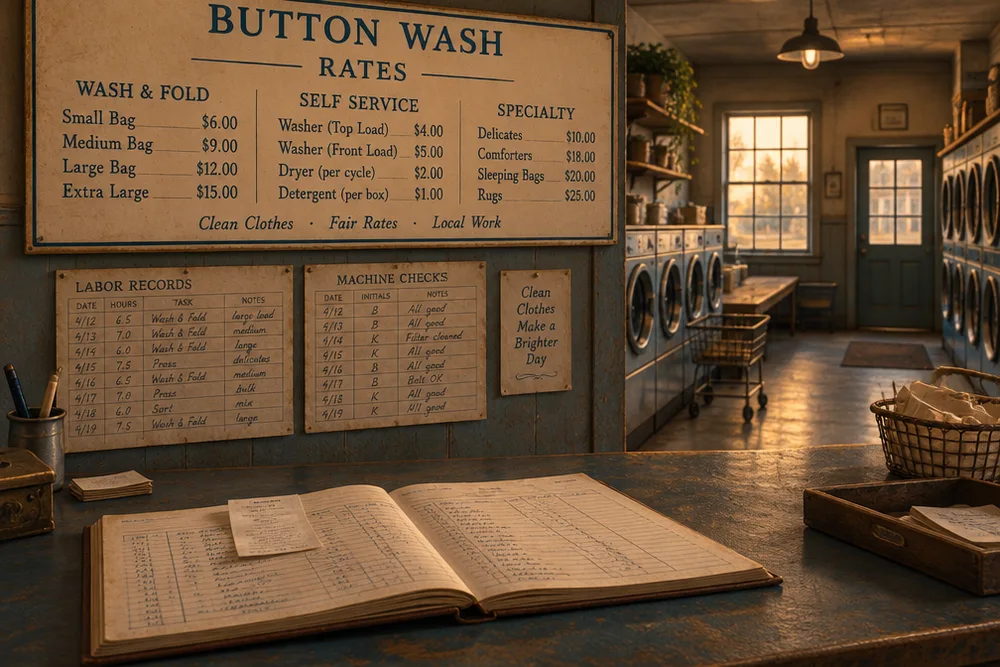
They continued uphill. At the shop door, Fern stopped to check the rate card through the glass. It hung straight, its figures dark and legible beneath the warm reflection from the lamps. Calder waited beside her, not offering to go in and change anything, not asking if she needed help. His presence was simply there.
“You’re not going to tell me it’ll work out?” she asked.
“Would you believe me?”
“No.”
“Then I won’t.”
Fern smiled despite herself. “That’s considerate.”
“It’s practical.”
She unlocked the door and switched on the light. The counter, the three washers, and the green cart with its yellow wheel appeared in familiar order. The place was not a memory of her mother’s work; it was a room where Fern still had decisions to make. She took the rate sheet down only long enough to straighten its top edge, then pinned it back in place.
The following morning, the shop was quiet. Fern entered the paid cycles into her ledger, recorded the folding minutes, and opened a new line for her own time. Her hand hesitated above the paper. Then she wrote the hours down. When Nessa came by before noon, she carried no pooled laundry. She paid for the Sedge Rooms’ own bundle, thanked Fern, and left without promising what would come next.
Fern set the receipt in the ledger and returned to the counter. The shop’s work continued: one renter bought a cycle, then another. Between them, the posted rates stayed visible. The numbers had not made the choice easy, but at least they no longer pretended the labor was free.