Laundry Uphill, Dinner on the Mainland
Page 206 of 224
Chapters
“I can offer a Sunday that includes a bad lunch and a walk up Pinch Lane.”
“And the low stone bench?”
“If you insist.”
“I do.”
He looked relieved, but not in the way someone looked when a problem had been solved for him. More like he had put down a question he had been carrying and found that the answer did not weigh too much.
They finished their plates slowly. Fern ordered tea; Calder chose coffee and drank it black. They talked about the hotel’s new inventory system, which had three separate ways to record a missing towel and no way to record a towel that turned up in the wrong room. Calder told her Nessa had moved the guesthouse folding back to Sedge Rooms and that Ruth had extended the public hours through winter after the Saturday usage proved itself.
“Nessa still sends the smaller hosts your way?” Fern asked.
“She does. Not every load. She’s got a system that works better for her now, and the posted rates are easier to explain than the old favors.”
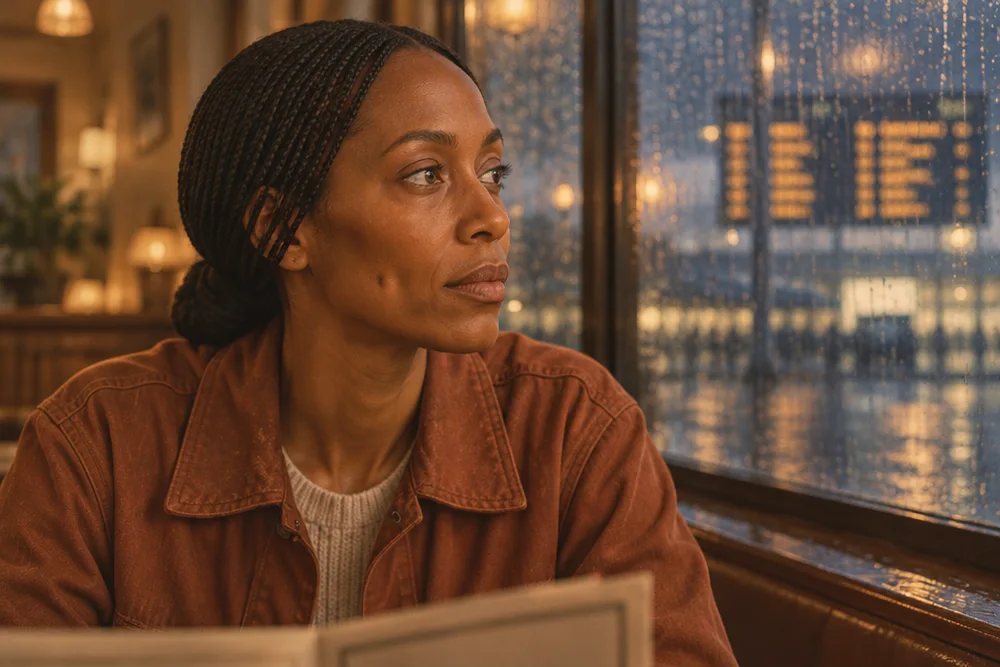
“Good.” Fern looked out at the rain. She could picture the white enamel counter, the green cart with its one yellow wheel, the stained cream key tag passing from her hand to Ruth’s. She could picture people bringing small loads and paying for the cycles, not asking her to absorb someone else’s costs. The shop had a future that did not depend on Fern remaining its emergency answer.
“I thought I’d feel worse about leaving,” she said.
“Do you?”
“Sometimes. Then I think of all the times I stayed late because I couldn’t imagine the place getting through a day without me. I’m glad it’s still there. I’m also glad I don’t have to prove it by being there.”
“That makes sense.”
He didn’t soften the thought or rush to make it happier. Fern appreciated that. Iona’s death had made every ordinary decision look like a balance sheet for a while: who had given what, what remained unpaid, what had been left behind. She had tried to honor her mother by continuing every arrangement as if stopping would reveal a flaw in the love underneath it. The months had shown her that love could be real without becoming a permanent obligation.
“I think my mother would have liked you having a life that wasn’t just the shop,” Calder said.
“She did like me having a life.” The words came easily, and she was grateful for that. “I was the one who forgot.”