Laundry Uphill, Dinner on the Mainland
Page 187 of 224
Chapters
The day’s receipts went into the handover folder. There was a refund, a service charge, and a record of every customer who had been moved to another time. The shop had made less than it could have made if Fern had accepted every bundle and folded through closing. It had also kept its public hours without turning the visiting crews away.
She put the cream key tag on the counter and rested her fingers over its stained corner. The tag would pass to Ruth at the transfer; the shop would keep going without Fern’s name attached to every decision. That was the point, though she had spent much of the week learning how difficult it was to let the point stand without herself standing beside it.
At the window, the sign for tomorrow’s slots had already collected a few drops of mist. Fern wiped the glass with the edge of a clean cloth and checked that the opening time showed clearly from the lane. Then she turned off the back lights and locked the supply cupboard.
A knock came at the door. One of the small-load customers from the morning stood outside, holding his ticket up through the glass. Fern let him in.
“I nearly forgot,” he said. “I’m meant to pick up this evening.”
“You’re right on time.” She unlocked the basket shelf and handed him his folded clothes. “Have a good night.”
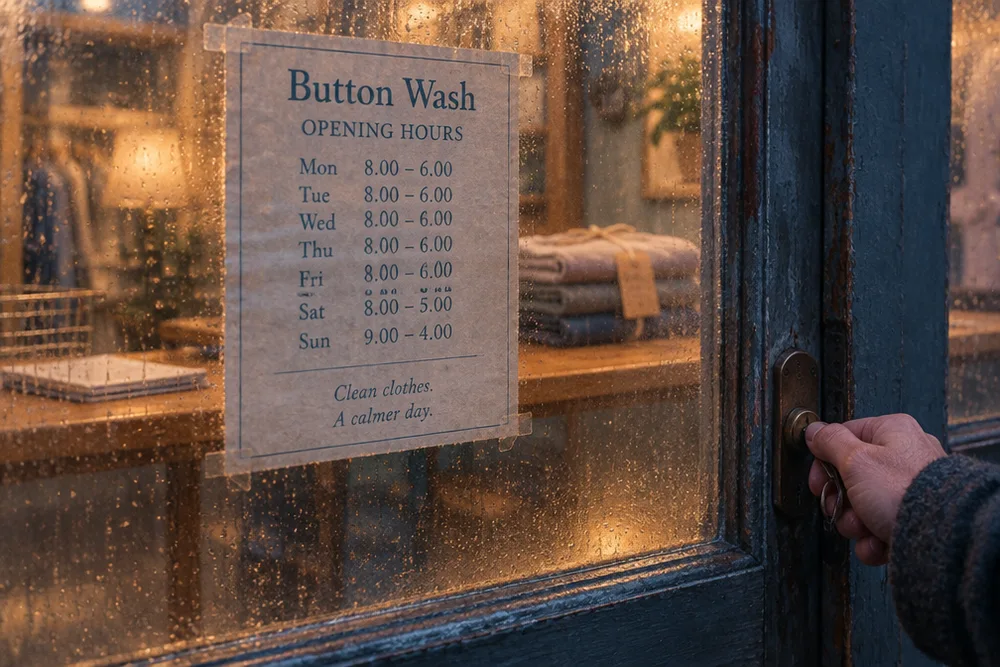
He thanked her, shouldered the bundle, and went back down the hill. Fern locked the door behind him. The shop had kept its promises for one more day, without asking her to make a promise that lasted forever.
At the end of the week, the backlog was gone. Some loads had gone through Button Wash, some had been folded at Sedge Rooms, and some sailors had carried their own damp clothes back to their boats. None of it resembled the old arrangement in which one person’s labor disappeared because everyone had got used to accepting it.
Fern copied the final Mending Week totals for Ruth: machine cycles, reserved host slots, refunds, folding work that had moved elsewhere, and the repair expense. Ruth would have the numbers when she took over. The shop’s future depended on whether the public hours paid for themselves, not on Fern staying close enough to rescue them.
Nessa stopped by once more before the last ferry filled. “The crews were grateful,” she said, setting down the final payment for her own wash. “Not every one of them said so. Some people think gratitude is something they can keep in their pocket.”
“They paid for the machines.”