Laundry Uphill, Dinner on the Mainland
Page 166 of 224
Chapters
The blank one waited. Calder read the scenario from the beginning. He put a small line beside the ordinary sequence, then read the exception without rushing past it. The question did not ask what happened in the usual case. It asked what the operator should do when the vessel was already committed.
The answer changed. He could see why the item had been written that way: not to test whether he knew the rule, but whether he could notice the point at which the rule no longer applied. Calder filled the box and moved his pencil away.
He checked the remaining answers once. He did not change the ones he had chosen simply because he felt nervous. When the invigilator called time, Calder put down the pencil. The blank space had become a mark, but not a triumph. It was one answer among many, and it might still be wrong.
He handed in the booklet and answer sheet. Outside the room, the click of the clock was gone. He stood in the hallway a moment, letting his shoulders loosen.
The clerk asked him to wait while the papers were checked. Calder took a seat by the window and looked down at the terminal’s entrance. People came through with wheeled bags, parcels, a child asleep against a shoulder. Across the car park, a delivery van backed into a loading bay, its warning beep repeating in a patient rhythm.
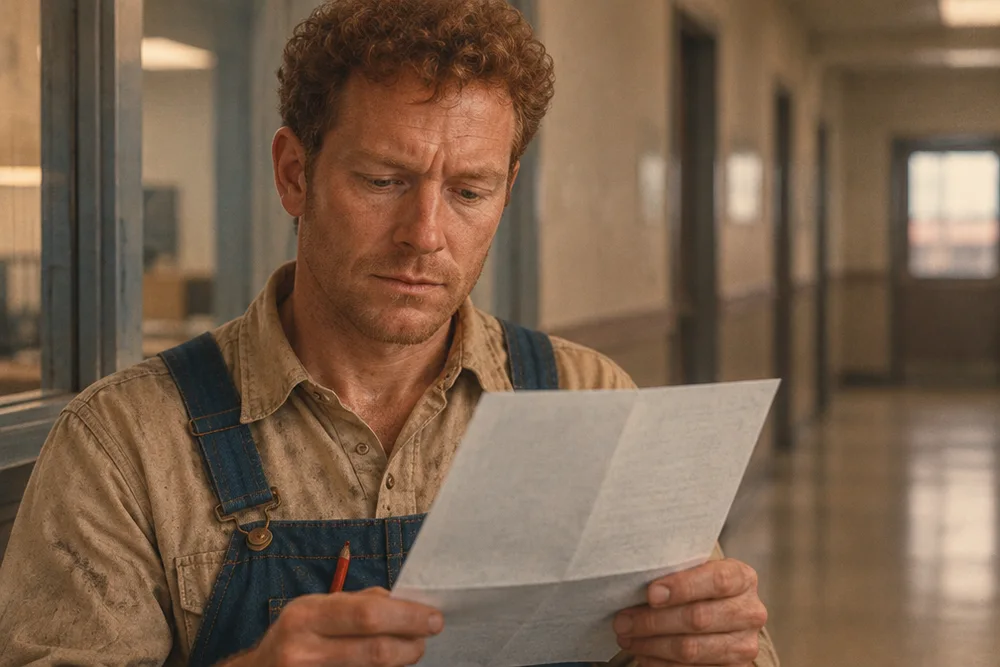
His phone showed no new message from Fern. He had not asked her to send one. He could have written to say the exam was over, but the words would have made her responsible for his waiting. He put the phone away.
When the clerk returned, Calder stood before she had finished saying his name. The result was printed on a sheet. He read it once, then again, as if the words might be another qualifier he had missed.
“You passed,” she said. “Your certificate will follow through the usual process. This notice confirms the result.”
“Thank you.” His voice came out lower than he expected.
She pointed to the information about eligibility and next steps. Calder read the lines carefully. The credential made him eligible for relief operation; it did not promise a route, a rota change, or an immediate promotion. He understood that in theory, but seeing the conditions in print fixed the shape of it.