Laundry Uphill, Dinner on the Mainland
Page 160 of 224
Chapters
“So do I.” Ruth did not smile, but her voice had lost its sharpest edge. “I’ll be back with the proper papers.”
When the door shut, Fern was alone with the measured floor and the receipts. She gathered the pages and squared them against the counter’s edge.
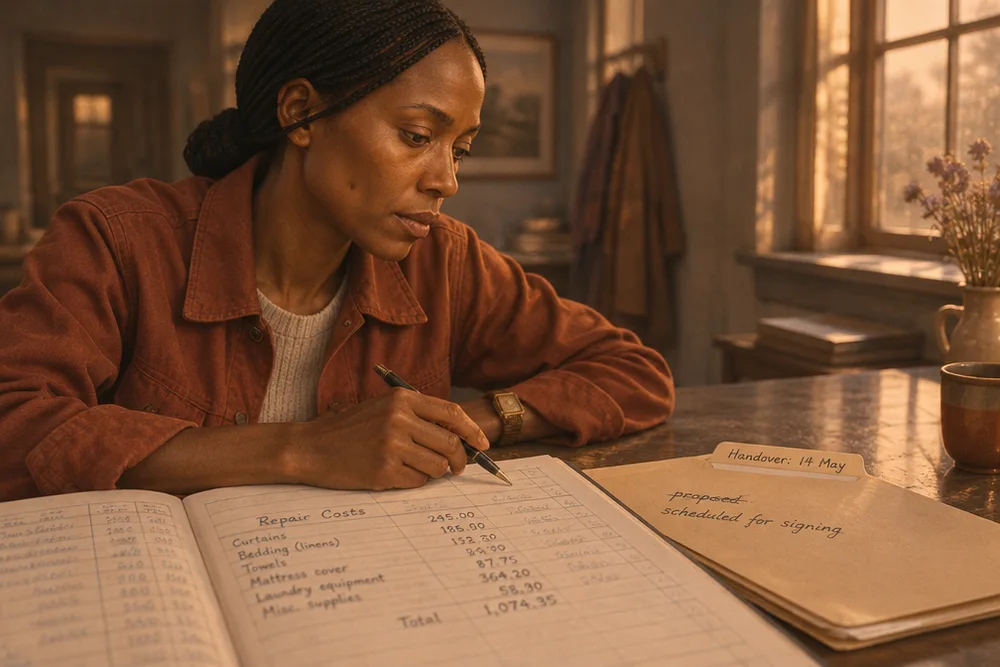
The paperwork went into a folder rather than the drawer where she kept the early-close offer. Fern wrote the proposed handover date on the folder tab, then paused with the pen above the word proposed. She crossed it out and wrote scheduled for signing. Not final, not yet, but not a thing she meant to hide from herself.
She opened the small ledger and wrote the cash figure Ruth had offered. Under it she listed the opening-week repairs: the service call, a replacement belt if the technician confirmed it, and enough cash left in the shop to keep change in the till. She moved money from the amount she had meant to take home. The early premium would have let her avoid that calculation. She made it anyway.
The decision did not feel brave. It felt like standing still long enough to see the cost in both directions. If she had taken the premium, she would have had more money and no public washing during Mending Week. If she waited, she would leave later with less, and strangers would get six days in which the shop could prove what the receipts only suggested.
She closed the ledger. Outside, the slope toward the quay was bright with a thin, late-afternoon light, but the shop kept its warm reflected shadows. Fern put the green cart near the back wall and checked that the bad wheel would not roll away.
At the licensing office on the mainland, Calder would be preparing for the exam. Fern knew the time of his lesson, the order in which he liked to mark qualifying words, and the way he leaned on one bent knee when he waited for her to finish a sentence. She knew less about what he would say if she told him the early offer had been real, or how close she had come to asking him to make the decision for her.
She did not call him. She did not want the first thing he heard to be a request to reassure her that the choice was right. He had asked for honest practice, and she had learned—slowly, badly—that giving someone help they had not asked for could still be a way of controlling the answer.