Keep a Cup for Nobody
Page 82 of 269
Chapters
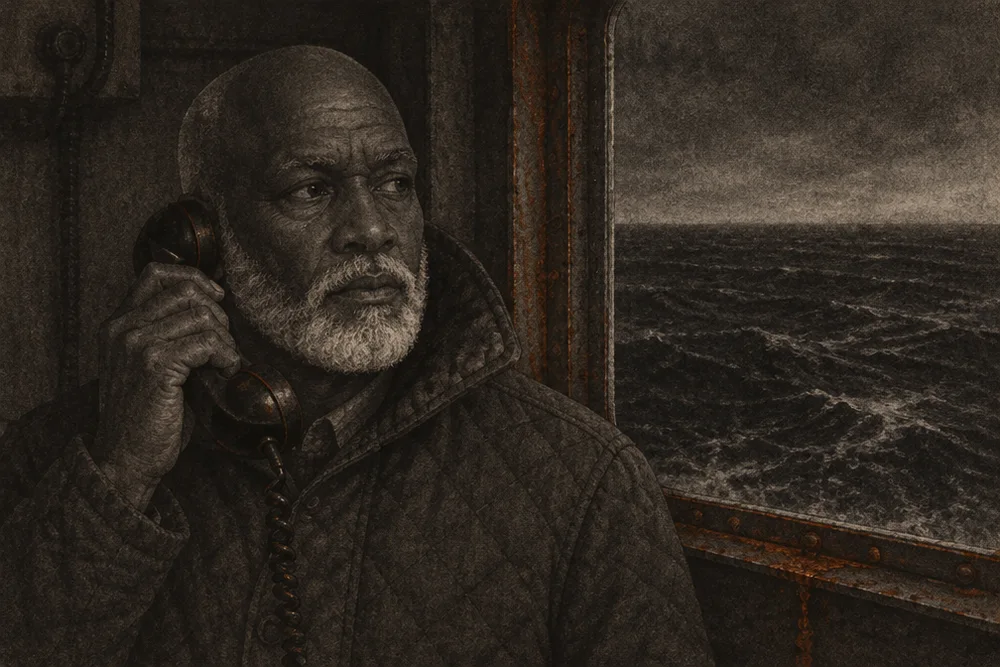
The voice was male, low and familiar in the way a tune might be familiar when its words were gone. Kit waited for recognition to arrive. Nothing did. His hand tightened on the handset until the plastic creaked.
“Yes,” he said. “I’m here.”
“Are you hurt?”
“No.” He looked at HUSBAND, at the ink swelling in the lines of his wrist. “I need to tell you something. I remember that we’re married. I remember facts about us. I don’t know who you are when I hear you.”
There was silence on the line. It was not empty. A breath moved through it, held and released. Kit could hear a faint clatter behind the voice, perhaps a cup being set down.
“You don’t know who I am,” the man said.
“Not in the way I should.” Kit swallowed. “I’m not ill, I think. I don’t know what’s happened. I don’t want you to come down expecting me to recognize you.”
“I wasn’t going to expect anything,” his husband said. “I was going to ask whether you wanted the porch light left on.”
Kit stopped breathing for a moment. The question struck with the quiet force of a familiar tool fitted into a hand that no longer knew it. He understood every word. He knew, somehow, that this was not a new question. It belonged to nights when one of them came home late and the other kept a small light burning by the door.
He could not remember answering it. He could not remember the porch or the man who stood inside it. The absence did not lessen the meaning. It made the meaning feel like a thing put into his care without instructions.
“Do you?” the voice asked.
Kit opened his mouth. The right answer seemed to be yes. The right answer might have been no. Either would claim a familiarity he did not have. If he chose from habit, he would be pretending. If he chose from fear, he might hurt someone whose name he could read but not feel.
“I can’t answer that honestly,” he said. “I’m sorry.”
“All right,” his husband said after a pause. “I’ll leave it off, then. You can decide when you get here.”
Kit stared at the radio’s little metal speaker. A sourness rose in him, not dislike for the voice but resentment at being asked to take a decision that belonged to a shared life. “I don’t know if I’ll be able to decide when I get there.”