Keep a Cup for Nobody
Page 154 of 269
Chapters
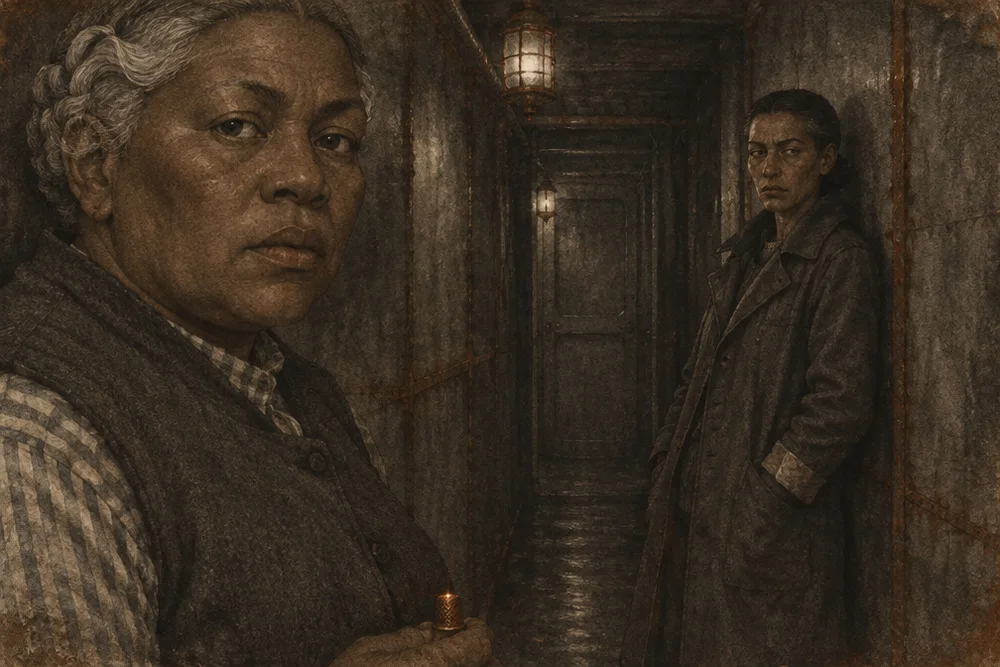
“You told me about the drawer labels. You told me you carried the cup out.”
Ada did not flinch. “I took it away. Your father sent it, but I carried it.”
“You were a child.”
“I was older than you.” Her voice was not sharp. That made it land harder. “I saw the empty place. I saw how quickly the names went missing. I knew enough to put yours back on the drawer and not enough—or not brave enough—to ask whose name I was taking off.”
Willa glanced toward the open tin, beyond which Kit and Iona sat shoulder to shoulder. “You said the cup went away empty.”
“It did.”
“And Nell was gone already.”
“She was drowned before she reached Nine Step. Your father set her cup out anyway.” Ada looked down at the thimble in her palm. “When he filled it, he was calling her back to the table. When he emptied it, he was telling her to go.”
Willa kept her gaze on Ada. “What’s the difference between calling someone home and delivering them?”
“I don’t know that there is one.” Ada raised her head. “Not if you only look at the doorstep.”
“You said he filled the cup when she moved in.”
“Yes.”
“And emptied it when he sent her away.”
“Yes.”
“Then he could have meant it as welcome once.”
“He did mean it as welcome once.” Ada’s answer came without hesitation. “That’s what makes the rest of it worse. He fed her. He taught her to mend a net without cutting the twine too short. He kept a place for her at his table. When she was alive, he loved her.”
Willa felt the old reflex stir, the one that reached for the version of her father she could bear to keep: flour on his wrist, a hand cool against her forehead, the low murmur of him telling her to sleep while he sat by her through fever. “He loved me, too.”
“Yes.” Ada’s expression did not soften into reassurance. “He did.”
“And after Nell drowned?”
“He couldn’t bear that she had died before she made it home. He couldn’t bear the empty place. So he made you fit it.”
A shudder passed through the boat. Somewhere near the stern a chain rattled, then settled. Willa heard the words as if they had been spoken in another room of the house, where a child might have been allowed to pretend she had not understood them.
“Did he know what it would cost?”