Bus Stops and Spin Cycles
Page 34 of 204
Chapters
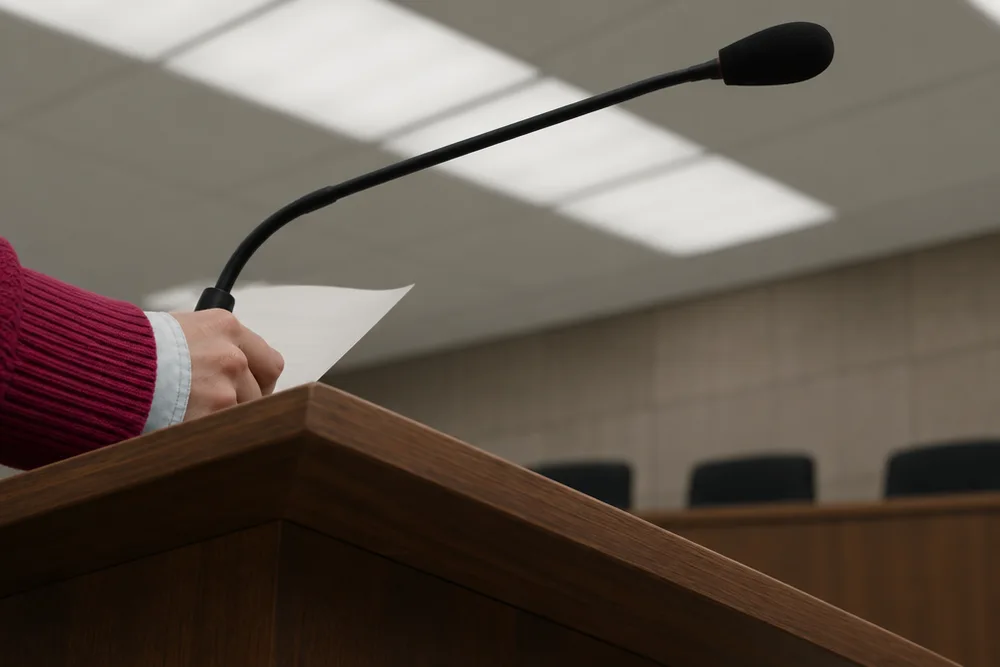
At the microphone, he bent at the neck rather than the waist, as though the small movement could bring him closer to the paper. He gave his name and said he worked as an attendance clerk at a school. He knew what a missed bus did to a morning: it turned a late arrival into a recorded absence, a person into a problem on a form. He tried not to make the example sound like a story he had borrowed from other people.
“The cleaners finish at seven,” he said. “Some are staff, some are agency workers. They come out of the Cairn Hotel Service Lane together, but they don’t have the same pay cycles or guaranteed hours. Foundry Bend looks close on a map. It is not an easy crossing after a shift, especially when you’re carrying laundry.”
He saw Dena listening without nodding. He kept his eyes on the councillors. It was easier to talk to the table than to the people in the gallery, whose faces he could not read from the microphone.
“A shorter route would make a real difference. The stop should be here, where people are already going.” He touched the map’s edge, not the shop’s mark. “And the wash should be available when they get there.”
He had meant to explain the distinction. He had written it in his notes: the bus can stop without the shop becoming a waiting room. But the sentence looked awkward on the page, and when he lifted his eyes the councillor who had asked about an anchor was watching him expectantly.
“My father used to say the cleaners would never have to wait outside for a wash,” Elio said. “He meant that they could come in before their shift ended, get a load started, and not have to choose between a clean uniform and making it home. Triana has kept the doors open early. It matters that the route recognizes the people who use this place.”
He heard the words from the speakers mounted high in the room. Never have to wait outside. The promise sounded broader when it came back at him. His father had said it in the shop, years ago, with one hand on a washer lid and the other holding a ledger. Elio had not been there for every conversation in which the promise was made. Triana had been. She owned the place now.
The councillor nodded. “So the shop will serve as an anchor for the new stop.”