Bus Stops and Spin Cycles
Page 202 of 204
Chapters
Triana had once believed a promise was only kept if the person who made it remained there to watch. Her father’s words had been repeated at kitchen tables and in the shop, trimmed to fit what the family needed from them. The cleaners had now written their own terms: paid opening work, a booking system, a repair limit, a review date. Their version could be revised when the accounts required it. It did not depend on her being the first one awake.
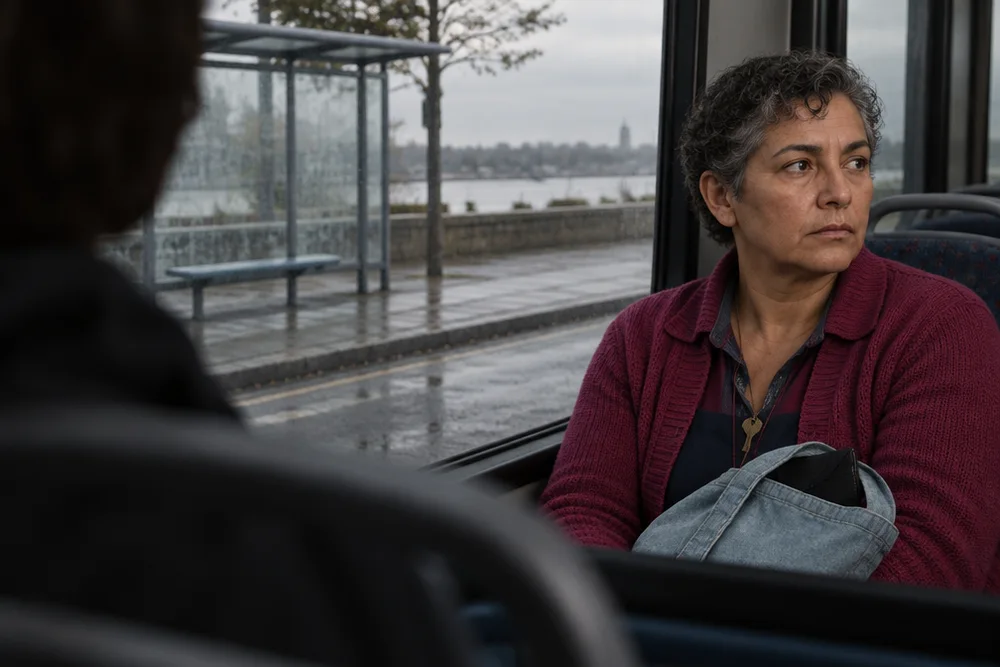
The bus pulled in, and Triana stepped forward. For a moment the smell of wet rubber and warm laundry crossed in the air between the curb and her bag. She boarded, paid her fare, and chose a seat by the window. She did not stand to watch the door until the bus moved.
As it pulled away, the shop slid behind the shelter post. Triana saw the opener through one narrow gap, checking a name against the booking sheet. Then the bend in the road took the view away. The bus rolled down from Bobbin Hill toward the next stop, gathering passengers without asking whether the shop was open or who had made it so.
At home, the washing would go into the drying rack. On another day she would come back and book a later slot, pay the same price, and wait her turn. In January, the members would examine the reserve and decide what the next request should be. The year-long lease remained a risk for the cleaners, and keeping the building remained a cost for Triana. Neither risk had disappeared because the first week’s wages were covered.
Still, before the bus reached the crossing, she realized she had not looked back. It was not a trick she had learned in one morning. It was a small decision repeated: leave the door to the person paid to open it; leave the accounts to the people who had made them; leave the promise with the people who would have to live by it.
At the next stop, two people got off and one got on. The driver waited for a woman to find her card, then eased the bus forward. Triana watched the route pass the market roofs and the service road she had once crossed in rain with Salma. The crossing was still steep. A shelter did not make it level. A bus did not make every shift predictable. But a person coming off work could now choose to ride without pretending the shop was a public waiting room.