Bus Stops and Spin Cycles
Page 20 of 204
Chapters
“You can put your name down for yourself.” Triana returned to the machine. “If you speak about the cleaners, get them to tell you what they want.”
He waited, hoping she might soften the refusal by making some alternative offer. She did not. A washer began its rinse cycle, water shivering behind the cloudy glass of its door.
“I’ll tell the survey team to stay outside,” he said.
“Then we understand each other.”
He left the map on the counter for a moment, then picked it up. The dotted bay looked less like a solution and more like a place where he would have to be precise.
The council sign-up sheet was clipped to a board beside the chamber door the following afternoon. Elio stood beneath the public notice listing the September hearing and wrote his name in the speaker column. The form asked for an organization, but he left that space blank. He had no right to write “Cairn cleaners” there.
Dena arrived carrying another route diagram. She scanned the sheet and stopped beside him. “You signed up.”
“Yes.”
“As yourself?”
“For now.”
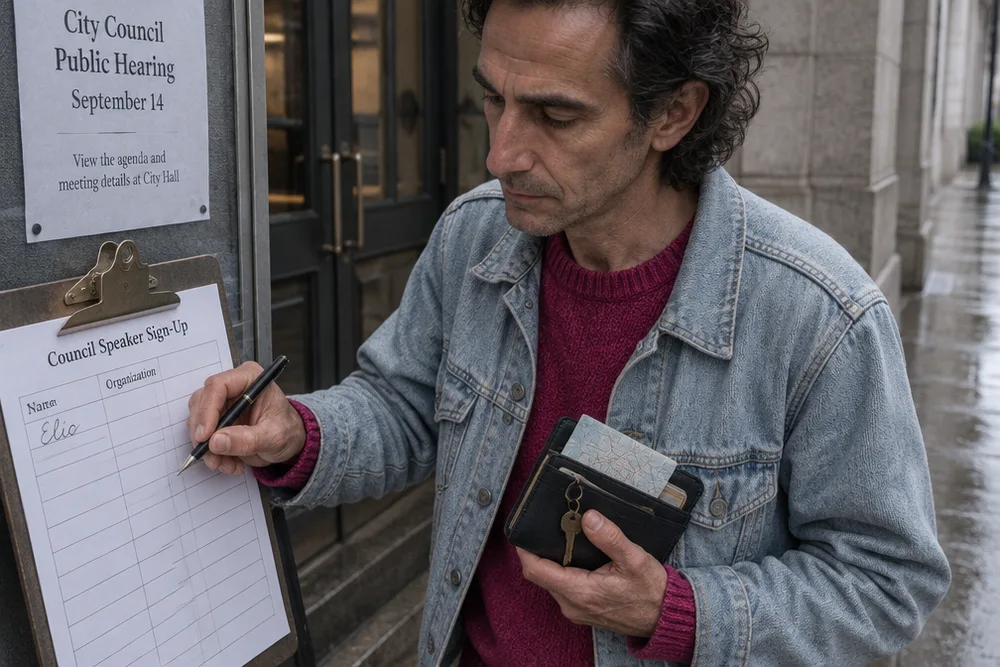
She studied his face, then tapped the blank organization line. “Leave it blank unless somebody asks you to represent them.”
“I know.”
“Knowing is easy. A microphone makes people borrow authority they don’t have.”
He capped the pen and slid it back into the chain. “I’ll ask Salma.”
“Ask her what she wants you to say, and what she does not want you to say.”
“I will.”
Dena leaned over the board to check the next speaker’s name. Her shoulder brushed his document wallet, making the elastic shift. One folded corner of the map appeared. She pressed it back in without comment.
Elio thought again of the proposed turn, the public bay, the unclaimed waiting-room box. At the hearing he could explain that the route could stop at Marlow Wash without taking over the shop. The distinction was real, he told himself. If the bus did not enter the side strip, if the shelter were placed on public ground, if no one promised access to the vestibule, then the shop would remain Triana’s and the stop would belong to the council.
He wrote the hearing date into his school calendar. There was a line for notes beneath it, and he wrote: Ask Salma. Ask Triana. Keep curb separate from shop.
On his way out, he glanced back at the empty organization line. He thought he could preserve the stop without committing the premises. The hearing, he believed, would let that distinction stay intact.