Bus Stops and Spin Cycles
Page 100 of 204
Chapters
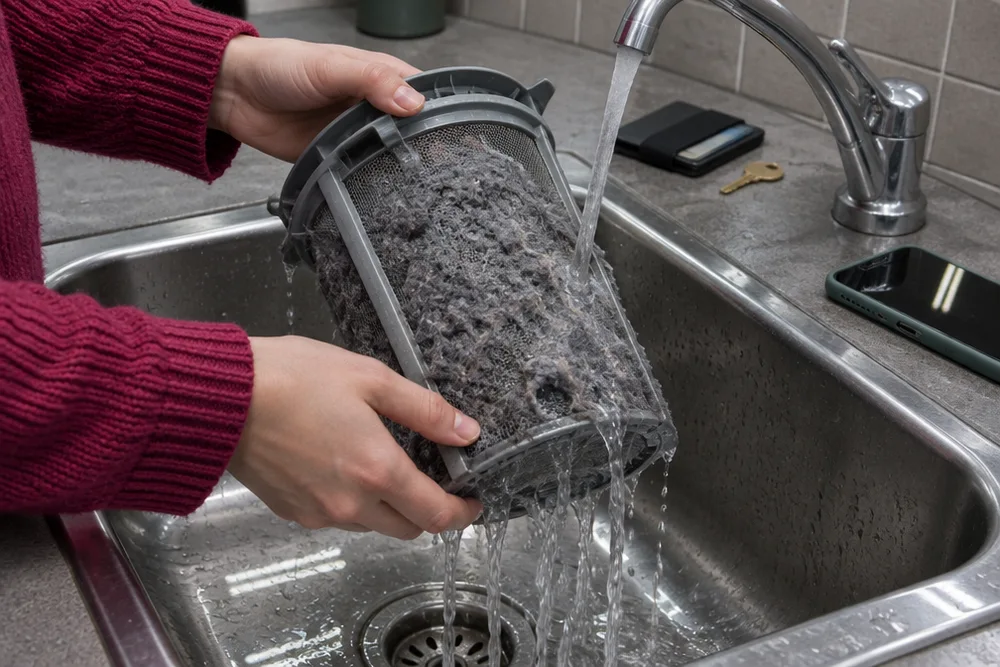
Elio called while she was checking the lint basket. His voice came through thinly, with the sound of a school office behind him. “How’s the test going?”
“We have a schedule that can work.”
“That sounds good.”
“It isn’t a repair fund.”
There was a pause. “I can ask Dena whether the route trial has any small operating grant—”
“Don’t.” Triana lifted the basket and checked the packed gray lint along its mesh. “The bus doesn’t pay for washer four.”
“I was only offering to look.”
“And I’m telling you what I need looked at.” She tipped the lint into the bin. “The cleaners are writing their own budget. They don’t need the route folded into it.”
“All right,” he said. “I won’t.”
Triana heard him take that in, or at least heard him stop talking. It was a small thing, but she let the quiet last. Then she rinsed the basket and set it back in place. The front drain had been backing up again; she tested it with a cup of water and watched the swirl go down cleanly.
“I should have asked before I used your promise at the hearing,” Elio said.
She put the cup in the sink. “Yes.”
“I know that now.”
“Good.” She ended the call before either of them could turn the answer into a ceremony. The shop smelled of warm cloth and detergent. Behind the glass, the curb bay was empty.
On Saturday, the midmorning rush covered the costs of opening, soap and electricity. It did not cover the repair. Triana marked the receipts with a short line and added the day’s total to the page Salma would take to the next organizing meeting. She did not round up. She did not subtract the call-out fee because it had already been paid.
At closing, Salma stood by the vestibule reading the draft conditions. The schedule had become a small, practical document: booking choices, shift changes, wash charges, opening wages. The cooperative’s name was not on it yet. The word lease appeared only in the heading.
“If we get the keys, who decides when a machine is out of service?” Salma asked.
“The operator has to make the call if it’s unsafe or leaking.”
“And who pays?”
“That’s the question your draft doesn’t answer.” Triana pointed to the blank space beneath repairs. “I can take structural work and existing equipment for the first year, if we agree on a condition report and a limit. I can’t promise every failure gets paid for.”