A Kiln for the Ferry Queue
Page 5 of 220
Chapters
The tape measure in her bag belonged to the community hall. She had borrowed it that morning and promised to return it before closing. The baths’ council notice had given the building’s dimensions, but not the ones that mattered to a working class: where a wheel could sit, how far a student had to carry a bucket, whether the former laundry had a drain that still worked.
She had not told anyone she was going to measure it. Telling people made an idea sound like a plan. Plans invited questions about money.
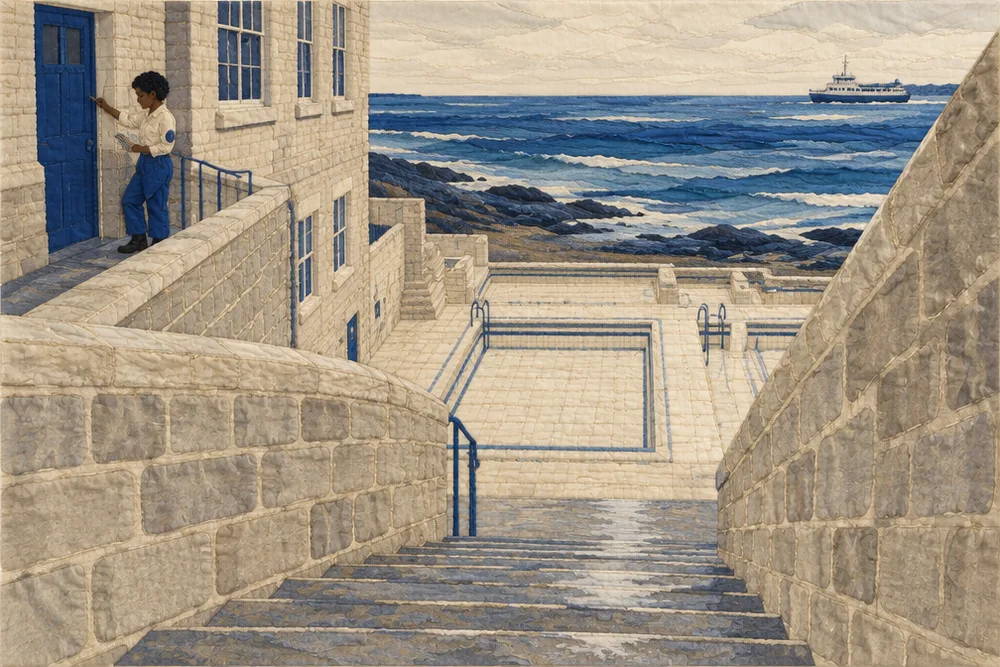
The top of Salt Steps was slick with spray. Cora started down briskly, one hand brushing the wall, boots finding the worn middle of each tread. The tide had turned, but not enough to close the way. Far below, the landing’s dark mineral line marked where the water usually reached; the steps were still dry above it.
The shortcut cut across the slope between upper street and low wharf. From here she could see the ferry’s three-sided Needle Shelter, small against the landing. A paper ticket skittered across its concrete floor and caught at the base of the bench. Someone had weighted the timetable with a stone.
Cora kept walking. She had not come to solve the ferry landing, or the council’s plans for it. She had come to see if Brine Baths could be a pottery school.
The building sat above ordinary high water, its old brick walls pale beneath the grime. The plunge hall’s high windows looked blind. A service entrance climbed to the uphill side, where a narrow ramp met the door. Cora had passed the baths since she was a child, when the pool had still been filled and the tiles shone under the lamps. Now the place was drained and quiet, but its outline remained generous: a great room with a high ceiling, a tiled vestibule, and the laundry rooms tucked along one wall.
She stopped where the path levelled and took out the tape. The borrowed metal case was scuffed; its hook had a slight bend. Cora extended it across the service entrance, then wrote down the width in her notebook. She checked the ramp slope by eye, measured the door and marked the landing beyond it.
A gull cried from the wharf. From the shelter came the thud of the ferry’s gate opening, then a murmur of passengers. Cora looked at the timetable through the gaps in the wall. The late trip was listed in smaller type beneath the daytime crossings. She noted the time without deciding why.