A Kiln for the Ferry Queue
Page 133 of 220
Chapters
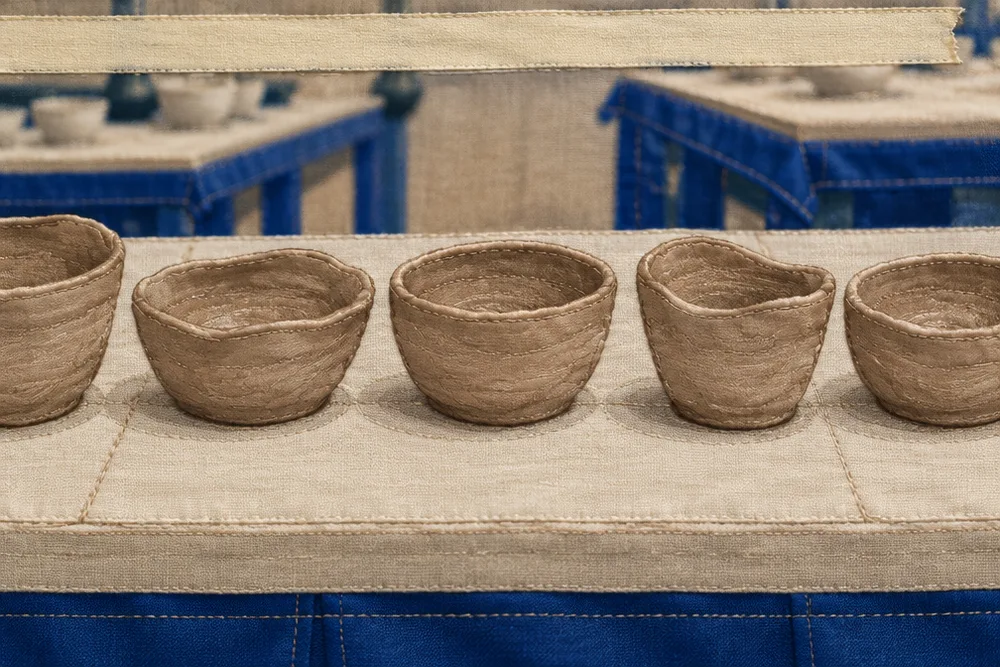
A week later, the smaller pieces of clay Cora had brought to the Hem Room sat in a row beneath a strip of masking tape. She had measured the compact kiln’s chamber twice and divided the available shelf space into plausible loads. A beginner could make one bowl that fit. Two bowls would mean either a longer firing schedule or a gamble with the rims touching. Cora had already told the cooperative she would not build her school on money they could not safely spend. She would not build it on imaginary capacity, either.
“One bowl each,” she told the class. “Not one bowl and a collection of little extras. We’re going to learn to make that bowl hold its shape.”
A student named Hal raised his clay-slick hands. “What if I’m bad at one bowl?”
“Then we’ll make it better together.” Cora placed a lump of clay in front of him and showed him how to center it. The task was slower than her old plan, which had assumed a larger kiln and more table space. She had wanted each student to leave with a handful of small objects, proof of an abundant evening. Instead, she watched them concentrate on one form. The work demanded more from her, not less. Each beginner needed a steadying hand, a correction of pressure, a reminder not to force the wall thin before the base was ready.
By the end of the session, Hal’s bowl leaned, but it stood. Ede’s bowl had a rim she could repair rather than start over. Cora set both on a board and understood that a small kiln did not make teaching a smaller job. It made the limits visible sooner.
Ede stayed after the others had gone. She had changed out of her care-worker scrubs only by removing her quilted vest; cobalt trousers still showed below the edge. “I want to teach,” she said. “Not assist you for free. I can do an introduction for people who’ve never touched clay. One session. Paid.”
Cora wiped slip from her palm. “You’ve never taught a class.”
“I’ve shown residents how to do things they think they can’t do. I know how to slow down without making someone feel slow.” Ede’s chin lifted. “If you want me there just because you need another pair of hands, no. If you’ll pay me to teach, I’ll plan it.”
Cora looked at the row of uneven bowls. Ede was not asking for permission to be useful. She was asking for a wage and a chance to do a job she could do.