A Kiln for the Ferry Queue
Page 113 of 220
Chapters
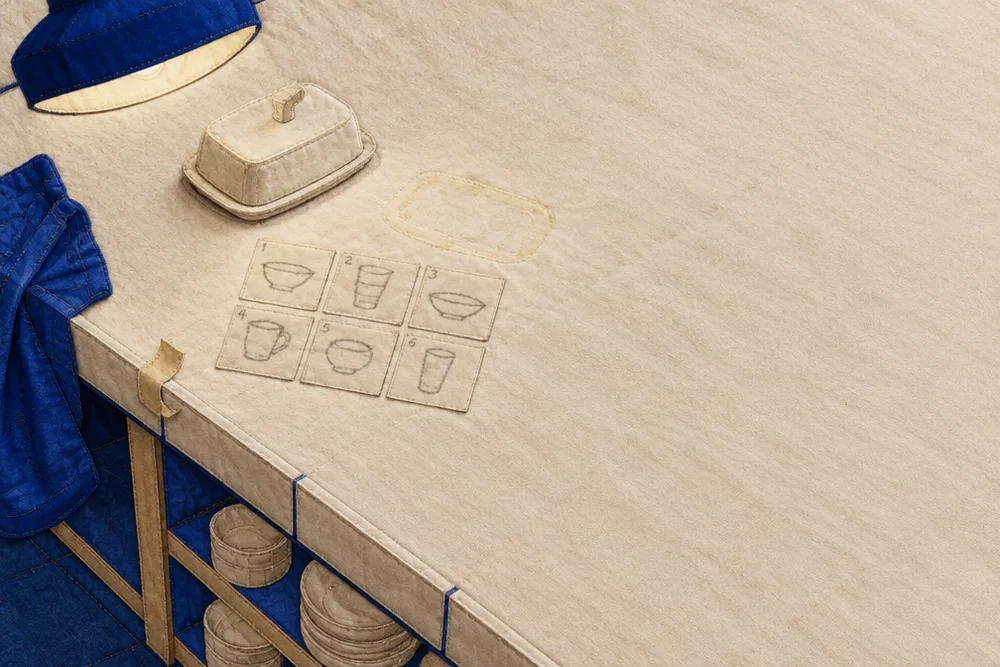
She peeled the unused length of masking tape off the edge of the counter. There were marks like that all over the room: names on shelves, names on plastic, arrows on scraps of paper to show whose pots could be lifted and whose still needed to dry. She had got good at holding on to things. Getting them back to people was a different job. Even with the firing arranged, this dish had taken the woman a second trip and nearly cost her the boat.
Cora took out the notebook in which she’d written the postponed delivery date. On a fresh page she drew six small squares for six lessons. She put a dot in the last one for collection, then looked at the square before it. A pot made in that lesson wouldn’t even be dry by collection night. A pot made in the last lesson would be hers to look after long after the class had stopped paying for the room.
She crossed out the dot. It wasn’t that collection shouldn’t be in the last square. It was that she’d filled every square with making something before she’d thought about how to give anything back.
“I need the counter now,” the owner said.
Cora shut the notebook and wiped away a pale half-moon of dust where the dish had stood. On the way out she heard the sewing students greeting one another in the passage and flattened herself against the wall to let them through. At the door she opened the notebook again and wrote one question under the empty squares: When do they get it back? She left enough room underneath for an answer that might take more than one line.
Cora spent the next two mornings working out what could be delayed without making the school useless. She could borrow wheels from the Hem Room for a few weeks, but the owner needed the room back on market days. She could teach hand-building without a kiln, but then finished pieces would have to travel elsewhere for firing. She could not charge students for a full term if she had no honest way to return their work.
The kiln supplier gave her the name of a workshop in the next town that accepted outside firings. It was not cheap, and the train fare would add another cost, but they had room in their schedule. Cora booked a small batch for the following week, enough to test the route before she promised anyone a class.