A Fuel-Free Tram for a Baker’s Name
Page 59 of 227
Chapters
Kit could have called out that the shuttle might help, that the lower stop would be built for a particular climb, that a shorter route was better than no route. But the plan still had no paid crew beyond its trial, and the first test had not yet happened. Selling a possibility as a rescue would be another way of asking workers to trust someone else with the cost. Kit let them pass. Then they wrote the batch hour beneath the missed-load figures, adding that the rolls had not sold before shift. The note was small but exact.
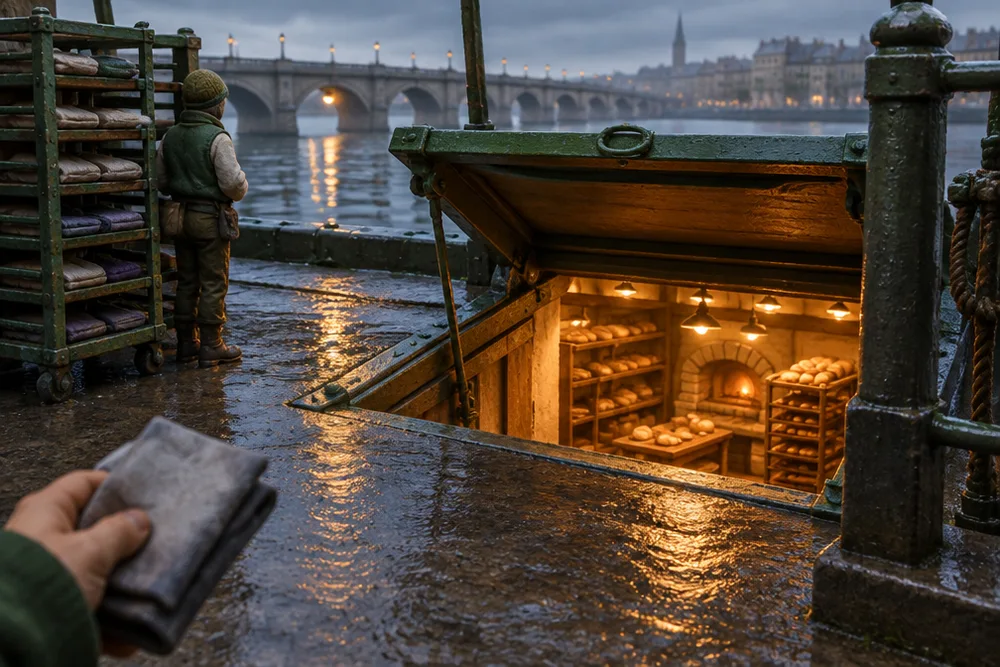
The bakehouse was quiet when Kit returned. They opened the alley hatch and found the bundle of rolls where they had left it. Two were gone. A scrap of paper sat beneath the string, written in the blunt pencil used for laundry tallies: Took one for the stair. Good bread. Kit read the note twice, smiling despite themself. A single roll taken on the way to work was not the customer pattern they wanted, but it was a real answer from a real person. They could alter the pickup time. They could ask the night crew whether a tray should wait at the landing instead of the hatch. Those were choices people could make together.
Kit packed the remaining rolls for the bakehouse workers and wiped the counter clean. They set the blue scraper beside the mixing bowl. When the oven cooled, they would need to ask for another batch slot, and the baker would ask what the sample had earned. Kit would tell the truth: the rolls were good; the timing was wrong; one worker had taken one for the stairs. If there was another test, it had to be paid for, and it had to serve the shift that actually came through.
At Linen Bridge, the copied clause remained pinned beside the missed-load tallies. Nemi had carried the rejected transfer requests toward the council, and the council would have to decide whether a short shuttle was worth more than keeping a century-old authority in reserve. Kit had no idea how many workers would risk speaking while assignments still bound them. They knew only that the question could not be answered in the tower by officials alone. They returned to the landing and waited long enough to ask the next person who stopped what a useful service would look like to them.