A Fuel-Free Tram for a Baker’s Name
Page 49 of 227
Chapters
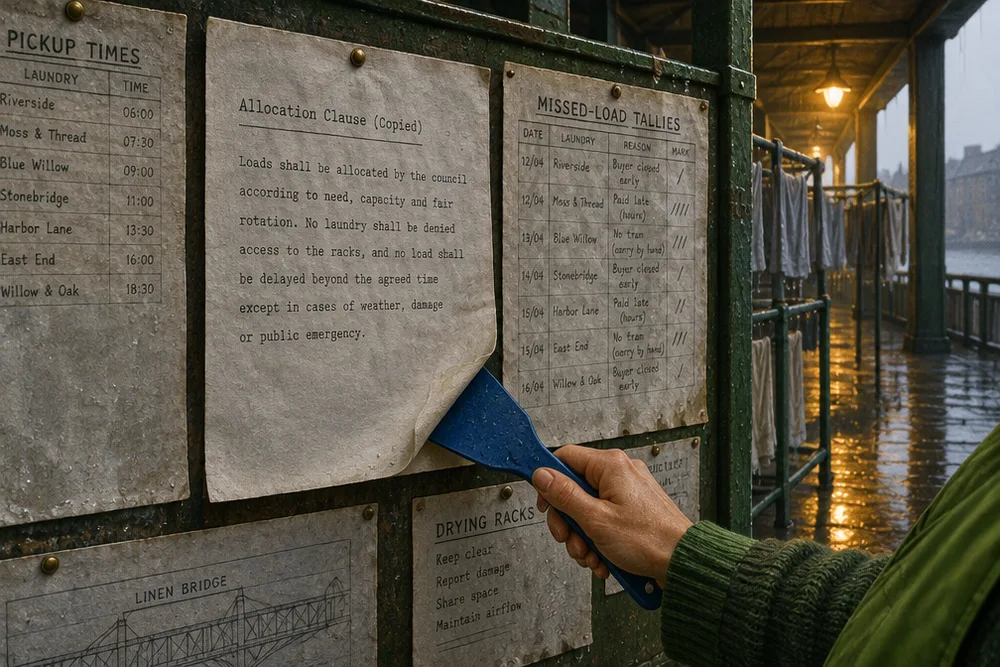
Kit pulled the hatch half-shut against the draft. The batch had been timed for the tram that no longer came. Before the bells stopped, workers from the middle terrace could ride down and buy breakfast on the way to the laundry or depot. Now they were using the stairs to make up for the missed service, and the people who had lost the most time could not pause for bread. Kit looked at the tin. A test batch was not a business, and a tray of untouched rolls could not prove that riders wanted a route. But the empty hatch could prove a different thing: the route and the workday had to meet each other at the right time. Kit wrote the hour down in the margin of their order sheet.
They wrapped the rolls and carried them to the night bakehouse bench, where the crew sometimes sat before ovens warmed. No one was there yet. Kit set the bundle beside the flour tin and left a note saying to take one. They did not want the bread wasted, but they did not want to call the batch a success just because people ate it for free.
On the way uphill, Kit took the copied ledger clause from the inside pocket of their plum apron. The paper had softened at the folds. They had copied it in the tower, carefully enough to keep every word in its place: the town received fuel-free tram service; in return, residents surrendered the right to refuse work assigned through the bargain. Beside that clause, someone had penciled Kit’s surname in an enrollment line. Their own name was still absent from the original ledger, but the council could put it there. Kit had said no to the work they glimpsed at the rope. No one had asked whether they agreed to the bargain that made a refusal insufficient.
At Linen Bridge, the covered middle-terrace landing smelled of wet cloth and soap. Laundries traded loads there, and the council used the drying racks to post allocations where every shift could see them. Kit found a gap between a list of pickup times and a sheet of missed-load tallies. The tallies had small marks beside each missed delivery: a bundle not collected before the buyer closed, hours paid late, a load carried by hand because the tram never arrived. Kit flattened the copied clause against the rack. A corner lifted in the draft. They pinned it down with the blue scraper.