A Fuel-Free Tram for a Baker’s Name
Page 160 of 227
Chapters
When the others returned to their tasks, Kit stayed at the edge of the yard. Beyond the depot, the cliff terraces rose in layers, sunny upper arcade now hidden beneath cloud. The old cars stood in their glass-roofed rows. One would remain intact as a shelter. The others would no longer consume the reserve that could pay a crew to operate No. 6.
A few weeks earlier, Kit had thought the town wanted their name because it had mistaken a glimpse for consent. Then the ledger had shown the deeper bargain: a promise of fuel-free travel written beside the surrender of the right to refuse. Their name could be placed on that line by people who had never asked what Kit wanted to bake, or when.
The agreement in the apron did not repair the bargain. It did not restore the bells or bring every car back. It was smaller, and more honest: a six-week trial, a lower route, paid hours, a public review. The people who needed it would be able to ride. The people who did not could choose otherwise.
Kit felt the paper’s edge through the plum fabric and thought of the night workers at Last Loaf. They had eaten the loaves on the landing, then carried baskets back to work. A warm bread could help a shift go easier. It could not shorten a staircase or replace wages. Kit would keep baking; the route would have to earn its own reason to exist.
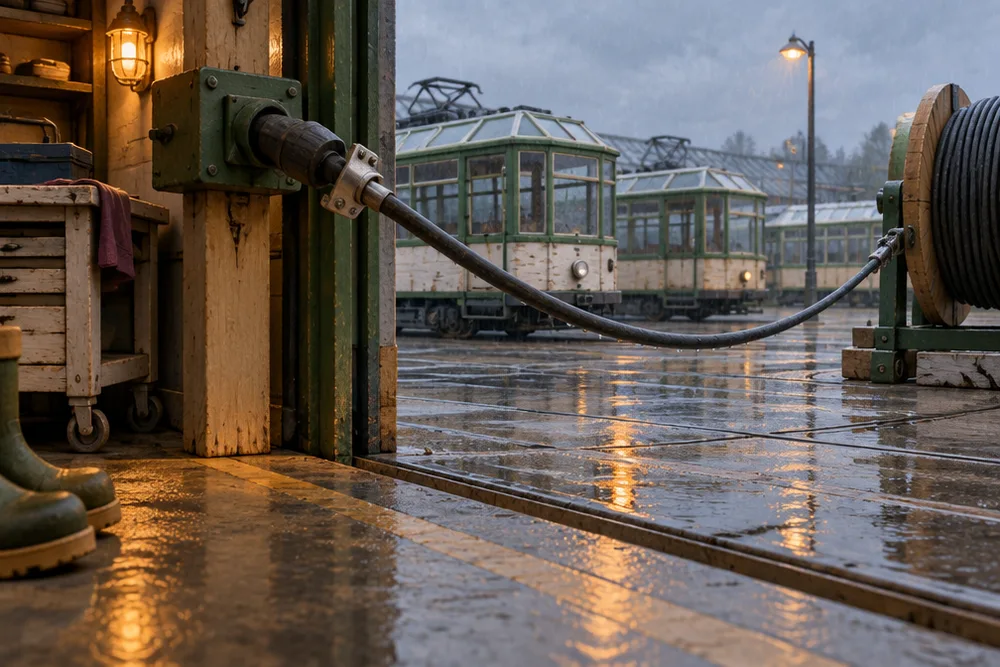
At the depot door, Iona held up a chalk-marked page. “Sef wants us to check the haul drum’s supply before he orders the meter seals.”
“I’m coming.” Kit picked up the blue scraper from the apron pocket and followed her inside. The lower workshop smelled of metal and oil. Behind them, the yard stayed open to the wet track, the quiet cars, and the public board where anyone could read what the town had agreed to pay for.
There would be a witnessed run. It might pass, or it might expose another fault. Both outcomes belonged to the people who had chosen to build the service, and neither would put Kit’s name in a ledger without permission.
Kit and Iona bent over the supply diagram. Across the page, a line of ordinary power ended at the haul drum. The route began there, not with a bell or a bargain, but with a wire they could inspect and a shift they would be paid to work.