A Fuel-Free Tram for a Baker’s Name
Page 151 of 227
Chapters
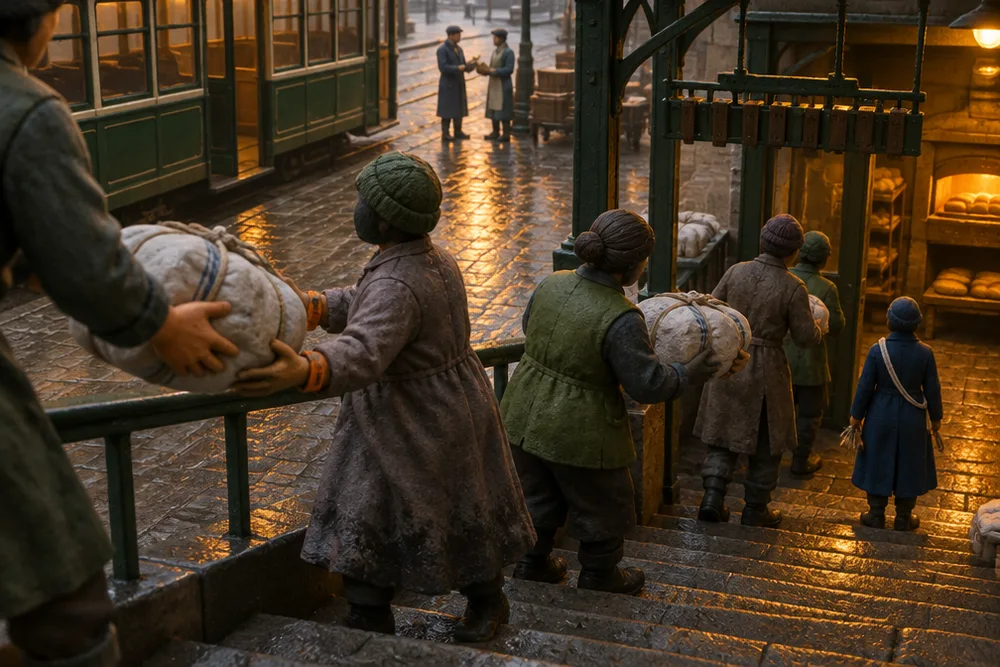
Mara arrived first, white tally cord looped over the ink-blue wrap coat. She had finished sorting laundry and still carried the cord’s little wooden markers in one hand. Behind her came Tavi Sorn, gray smock hem damp from the stairs, orange cuff clips bright against their wrists. Tavi gave the bread a hopeful look and kept walking; their shift was not finished yet.
“They’re coming?” Mara asked.
“Orro said he’d come. I didn’t ask the others.” Kit slid a loaf onto a tray. “I want them to see the line, not hear me describe it.”
They went down to the landing where the lower stair met the old tram way. The platform boards showed pale birch laminations along their edges. Beyond them, the quiet track curved upward toward the middle terrace. A rack held the priority tickets, their stiff paper corners curled by the damp.
The merchants arrived together, Orro in a russet scarf and Mrs. Pellin in a coat too fine for the stair rails. They held tickets marked for the first loads. Neither had brought a bundle.
At the bottom of the stairs, laundry workers waited with baskets and shoulder sacks. The stair chain moved each bundle hand to hand, but the priority holders were called first for the next available space on the haul. A merchant’s assistant stepped into the gap before Tavi could set down their basket.
“That place was mine,” Tavi said, not loudly.
“The ticket says first load,” the assistant answered.
Mara looked at the paper in his hand. “And the load after that?”
He had no answer. He turned his face uphill as the bundle went past him.
Kit watched Orro watch the queue. The merchants had come to inspect an idea. Here was the cost in bodies, minutes, and a worker standing with both hands full while someone else’s paper moved first.
No one spoke for a time. The stair chain kept moving. A woman with a linen sack shifted it from one shoulder to the other, then looked at the empty tram line as if it might yet answer her. The upper-terrace merchants had not been asked to lift anything, but they stood in the same drizzle and watched each ticket change the order.
“This is not a reason to dismantle the fleet,” Mrs. Pellin said at last. “You can improve the queue without selling the cars’ future.”