A Fuel-Free Tram for a Baker’s Name
Page 103 of 227
Chapters
“So it can’t take us there,” someone said.
“Not at that platform,” Kit replied. “The crew is looking at a lower landing. It isn’t built yet.”
“And you want us to pay before it’s built?”
“No. I want to know whether, if it can be built safely, you would buy two runs at the times you need. Then we can take the answer to the council with the cost.”
A worker with a blue scarf crossed their arms. “Why two?”
“One when the day shift ends, one when the night shift changes. A run down and a run up. Not an all-day service. Not yet.”
“If you run it only when people change shifts, it has to meet the shift,” Tavi said. They had arrived from the sorter’s with their orange cuff clips still on. “And it needs two people trained to operate. One person can’t be the whole safety plan.”
“That costs more,” Kit said.
“Yes.” Tavi tilted their head. “Did you think I was asking for it free?”
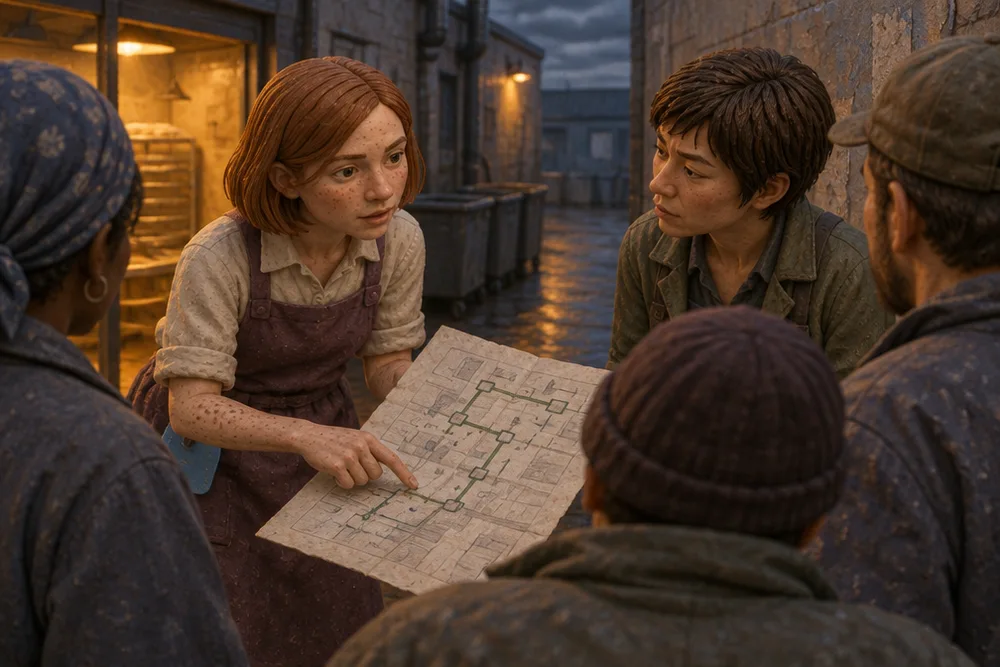
A couple of people laughed, briefly. Kit smiled, then wrote two operators beside the arrows. The words took room on the slate. That was right. The plan had to show the price of safe work instead of hiding it in someone’s spare time.
“What would you pay?” Kit asked again. “Not what you think the council wants to hear. What can you agree to for these two runs?”
They talked over one another at first. Someone wanted a token fare, someone else wanted a weekly pool, and one worker said the fares should be set aside for those who could not pay every day. The argument circled until Mara raised her hand.
“If it’s a pool, who holds it?”
No one answered immediately.
“And who decides what counts as a run?” she continued. “What happens if the tram doesn’t come? Do you still pay?”
Kit rubbed the side of the chalk with their thumb. “The fare should only be counted when the run is made. We can put the money in a shared box with two people checking it. One from the laundry, one from the crew.”
“And the price?” asked the blue-scarfed worker.
They settled on a small amount per ride, less than the cost of a reserved stair slot. People who could afford it would pay. The pool would cover a few rides for workers who could not. It would not cover all the shuttle’s wages or maintenance; nobody pretended it could. The fare would show that the service was wanted, not that the riders owed the town the difference.