A Cup for the Uncounted
Page 144 of 241
Chapters
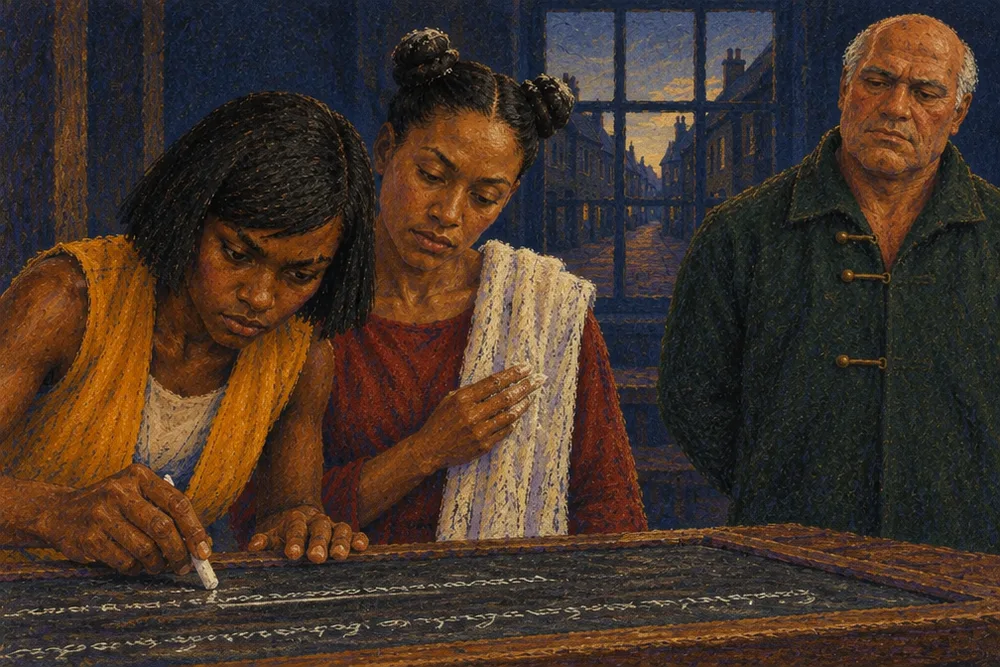
Sella read them over Carys’s shoulder. “That sounds like something an examiner would write.”
“I’m trying to make sure nobody counts your crock as extra water.”
“Then write that it’s my crock,” Sella said. “And that it takes work to fill.” She rubbed flour from her fingers onto her wrap. “I don’t want a future clerk saying I had a full tank because your board says storage made it possible.”
Carys erased the line and wrote it again: Bakery’s covered crock; stored water remains within measured turn; filling and keeping it clean require labor. It was clumsier. It was also truer.
“Better,” Sella said.
Iven stood at the other end of the bench, considering the revised line. “We will need matching records from Middle and Spindle,” he said. “Otherwise the exception becomes a rule for only one terrace.”
“It isn’t an exception,” Carys replied. “Any household can store its measured water if it has a clean vessel. The bakery needs it to move work across the day.”
“And if a business draws from a shared vessel?”
“Then the vessel and the delivery have to be counted.” Carys looked at him. “No hidden extra. No private turn.”
Iven gave a slow nod. He did not praise her. She was beginning to understand that praise from him was less useful than a rule written clearly enough to survive him.
When Sella left, she carried no water away. The crock remained at the bakery, sealed for morning. Carys watched the upper lane darken through the hall window. She could picture the lid, the chalk line, and the water resting underneath it—not a promise that Upper would always bake as before, but a little space between the sluice and the oven bell.
Her notes now held the price of the late turn: a missed market opening, fewer loaves, a small batch made possible by storing the next draw. There was no way to rub out the first fact with the second. Still, Sella had agreed to return for the next trial.
Carys closed the slate and carried it to the shelf with the other records. Below the day’s times, she added a final note in the margin: Ask each terrace what it can store, and what it costs to store it.
Outside, water moved somewhere below the floor, traveling through pipes toward doors that had once been left off the map. Tomorrow it would move by another order. The bakery would be ready for the first part of its work before the bell rang.