A Bowl for the Missing
Page 279 of 282
Chapters
“You helped her make the plan.”
“I helped pay for it. That isn’t the same thing.” Vera sat on the stool, careful with her long, stiff back. “The icehouse was my responsibility. I thought that meant I should be the one to decide what happened to everything in it. It made it easy to keep a hand on the door and call that care.”
Niko did not tell her it was all right. It was not, and he would not make the truth smaller to soothe her. Instead he slid the slate back. “The rota has my name on tomorrow’s tray round.”
“I saw it.”
“Then you know I’m not waiting to be carried.”
“I know.” Vera stood. “I’ll see you at Three Tables.” She left the room with the slate tucked under one arm, and the street outside carried her steps all the way to the corner.
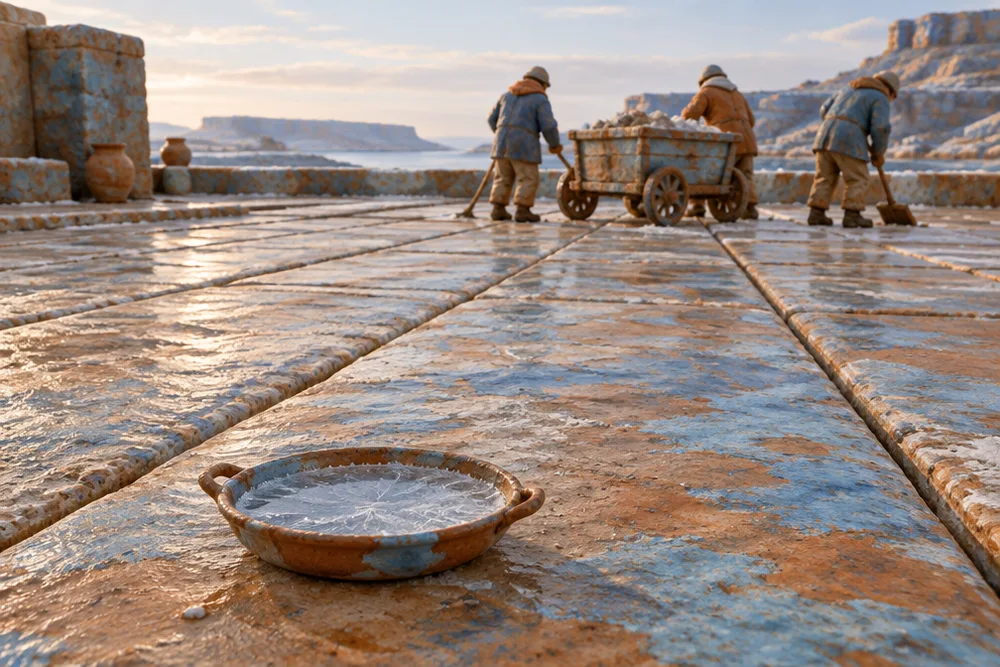
The next morning, the coldest pan had a thin, clear plate of ice across its surface. It was not enough to store the orchard’s seed stock. It was not enough to make anyone forget the icehouse. But it had frozen without a sealed vault, a reserve plate, or a building surrendered into the circuit. The runners recorded the depth and time, then left the pan where it was.
Pell rolled his cart across the terrace to deliver milk to the kitchen workers. He had added a small bell to the handle, distinct from the paired bottle caps on his cord. The cap taps marked his old route; the new bell warned anyone handling a pan to make space for the axle.
“I’m not changing the route until there’s a reason,” he said when Niko asked about the extra bell. “People need to know what they can count on.”
“And if the route stops working?”
“Then I write down where it stops. I don’t keep ringing at a wall and tell myself I’ve delivered.” Pell glanced at the new Heel Lane line in his book. “Same rule for every stop.”
He gave Niko a bottle for the seed kitchen. It was an old deposit bottle, scuffed around the neck. Niko checked the account tag before he took it, then placed it in the cart’s empty rack so it would return by the proper route. The work had become a chain of ordinary decisions: who carried the water, who checked the measure, who would be paid for the time, who would sign for the delivery.