A Bowl for the Missing
Page 256 of 282
Chapters
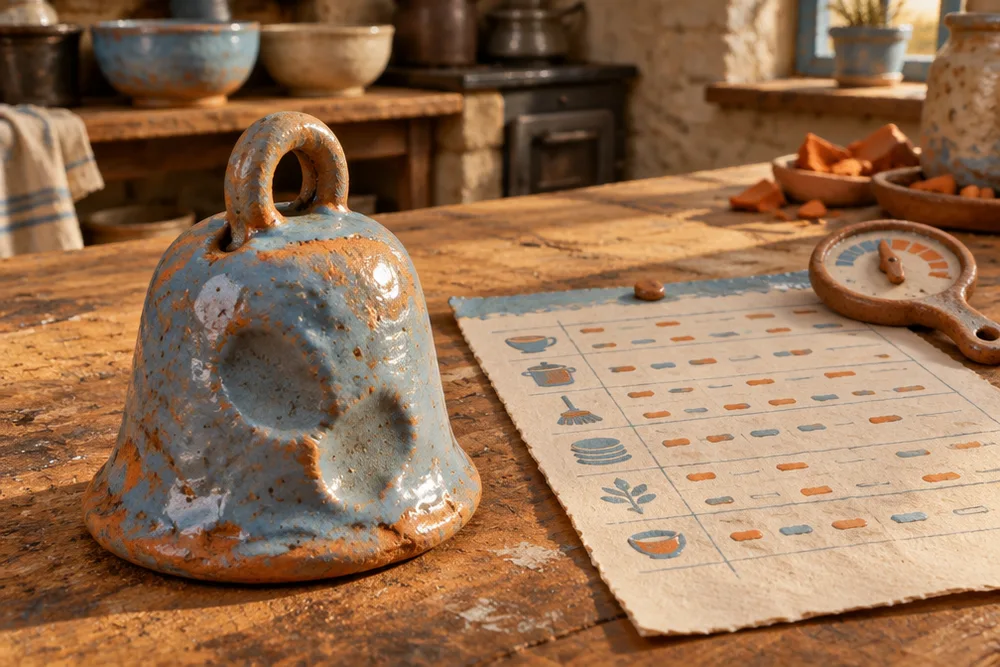
Niko considered that. His loan bowl had been a useful object before it became a registered offering, and it might be a useful object again. He did not know whether he wanted it back. Its room mark had passed into the plate; its chipped rim had held the exchange. Returning it to his kitchen would not undo what it had done, just as returning his address had not returned the old common store.
“I’ll decide when it’s a bowl again,” he said.
“That sounds fair.” Vera rubbed a smear of clay from her palm. The mark stayed in the lines of her skin.
Bess came from the worktable carrying a pan. “You’re the kiln repairer,” she said. It was not a question. “These need to fit three sizes of tile. Can you make a gauge that our runners can use without measuring every time?”
“Probably.”
“Probably isn’t a schedule.”
“It’s a first answer. Bring me a tile from each kitchen, and I’ll make a set of measures. If you want them to nest, I need to know how much space the shelves actually have.”
“Good. That’s a job, then.” She pointed her minute bell toward Vera. “And the paid rounds start at the hours on this list. If a household withdraws, we move the work before we move the seeds. I won’t make the cooks carry another shift because someone thinks the crop is urgent.”
“Agreed,” Vera said.
“Don’t agree for them. The people on the rota agreed.” Bess tapped the posted list. “You can agree that the wages are there.”
Vera glanced at the board. “The transfer is signed. The wages are there.”
Niko watched the exchange and understood more clearly what the surrendered icehouse meant. The town had not replaced a cold room with good intentions. It had moved money, responsibility, and authority into a different arrangement, one that could still fail but could be questioned before failure became a missing address. Bess’s bell called people to the next task. It did not ring to announce a sacrifice. It marked a shift beginning on time.
“I’ll bring the tiles tomorrow,” Niko said.
“Today,” Bess answered. “Tomorrow we start firing the first pans.”
He laughed. “Then today.”
They gathered the tile samples before the kitchen rounds began. Niko measured each one with his folding gauge and marked the differences in a waxed notebook. Vera carried the samples from the lower kitchens, asking owners before lifting anything from a shelf. Some tiles were cracked; one had been laid over a repaired patch. The pan design would have to fit the unevenness, not the ideal measure in a drawing.