A Bowl for the Missing
Page 212 of 282
Chapters
Orra nodded slowly. “Yes. That’s the order I remember.”
Vera wrote the bean’s name next to the tray’s visible chipped rim. She did not restore the tag. The wet string had stretched and might tear if she tried to tie it again. Instead, she folded the tag into a dry paper sleeve and fixed the sleeve to the cart board beside the tray. It would travel with it without pretending to be part of the seed’s own record.
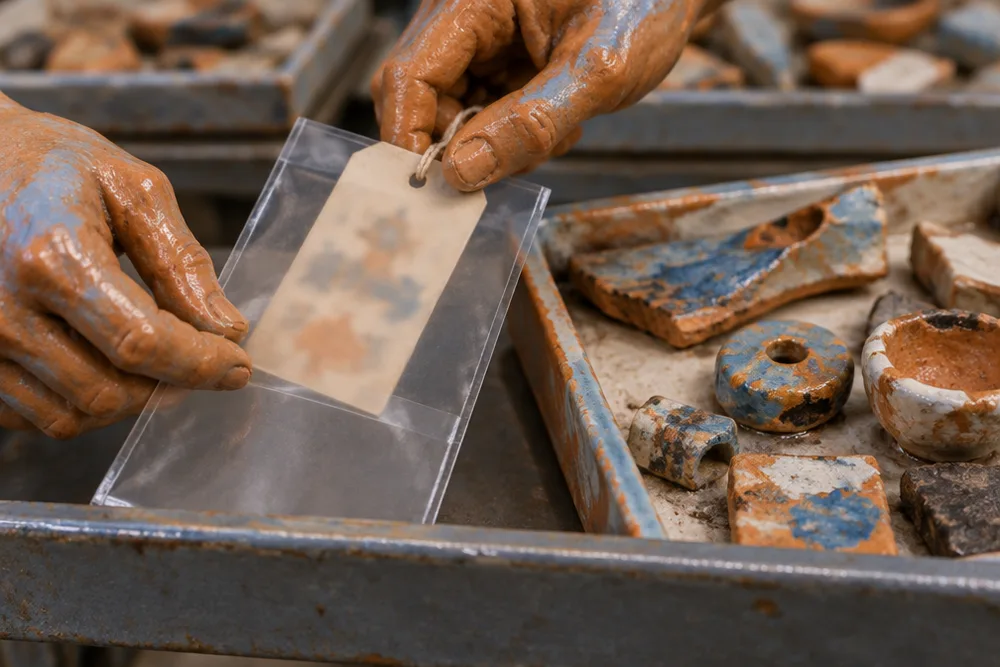
The other loose tag had stuck to the cart board long enough for its writing to blur. The name on it had become a dark smear, still shaped like letters but no longer readable. They carried it to the measuring gallery and held it near the tally board, where Vera had written the planned order for the second load.
“It must be the red onion,” the young runner said. “That’s the tray left.”
“Must is not a name,” Vera replied.
“We know what we loaded.”
“We know what you thought you loaded.”
His face tightened. He had worked the shift without a pause and had lifted more weight than anyone else on the line. Vera saw the anger under his fatigue and wished she had a better answer to offer him than caution.
“If we assign it wrong,” she said, “we might plant onion where the hill pea belongs. Or the other way round. We could keep both alive and lose the knowledge of what either one is.”
“And if we leave it blank, we lose one family anyway.”
“We lose the certainty of its family. That is not the same thing.”
Bess stepped between them, not blocking either of their sightlines. “No one is sending a tray to the rubbish. It goes into a bed on its own, without a name we can’t prove. We can see what grows. We can save seed from it only as mixed stock, if it sets.”
“That gives it a place,” Vera said. “Not an ancestry.”
“It gives it care,” Bess answered. “Those are separate questions.”
Vera considered the ruined tag between her fingers. The waxed ink had protected it from ordinary damp but not from a morning spent under a chilled tray. Her first impulse was to restore the family name from the planned order and let the record become true by repetition. The impulse was familiar: if a list looked complete, the town could act as if nothing had gone missing. This was not that kind of missing. She placed the tag inside a second sleeve and wrote UNKNOWN—MIXED BED on the outside.