A Bowl for the Missing
Page 142 of 282
Chapters
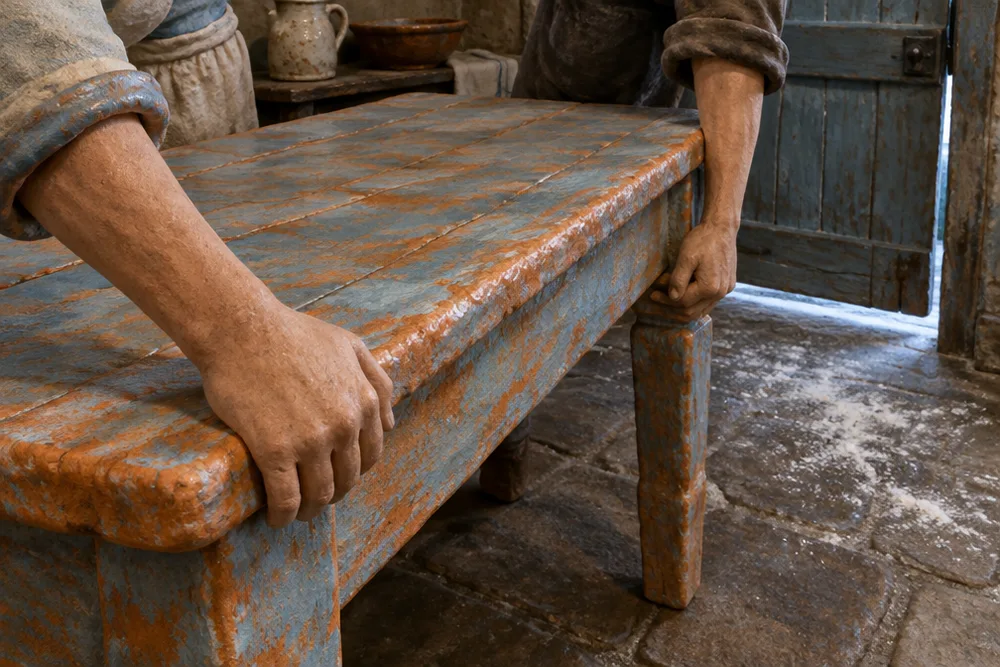
Bess Tarrow stood heel to heel beside the free table, her two gray-threaded twists tucked behind her ears. She had a dented minute bell in one hand. With the other, she pushed the table away from the door, one deliberate scrape at a time.
“That’s the second time this week,” Vera said, setting down the trays.
“And the second time I’ve had to tell somebody not to put their bowl in the gap.” Bess nudged the table another handspan. “The draft dries bread. It dries seedlings faster.”
She called two kitchen workers over. They shifted the table with her, then carried the free-meal pots away from the newly cleared space. Bess rang the bell once, not as a summons but to mark the start of the work. A young runner fetched a folded cloth to block the draught at the door. Another measured the cleared corner with a length of string.
Vera watched Bess test the new position by setting down a shallow pan of soil. The pan sat level. Bess tapped each rim and checked the dampness with a finger, then had the runner turn the pan so the light fell across it evenly. The work was not grand. It was a sequence of small corrections that would have to be repeated every day.
“We already have meal service,” Vera said. “Seed care could fit around it.”
“Could,” Bess replied. “That word is where favors hide.” She moved a pot away from the stove’s heat. “When someone says they’ll keep an eye on a pan, they mean when they have a spare minute. My people don’t have spare minutes. They have shifts, and those shifts are already counted.”
Bess brought Vera to the free table’s new position and showed her the trouble in the room. The door’s draught had been only one of it. Steam from the meal pots climbed toward the rafters, then condensed over the coolest corner. The seed pans there stayed damp on top and sour underneath. The stove side dried them out. The table had to sit where the air moved least, but still receive enough light from the high window.
“If we put the pans here, who turns them before breakfast?” Bess asked. “Who checks after the paid meal? Who notices when a pan needs water and who gets the water? And what happens when the person on the rota is late because the kiln has called them in?”
“We could assign one person each day.”
“You could,” Bess said. “You’d still be assigning their time. Do you intend to pay them?”