A Bowl for the Missing
Page 117 of 282
Chapters
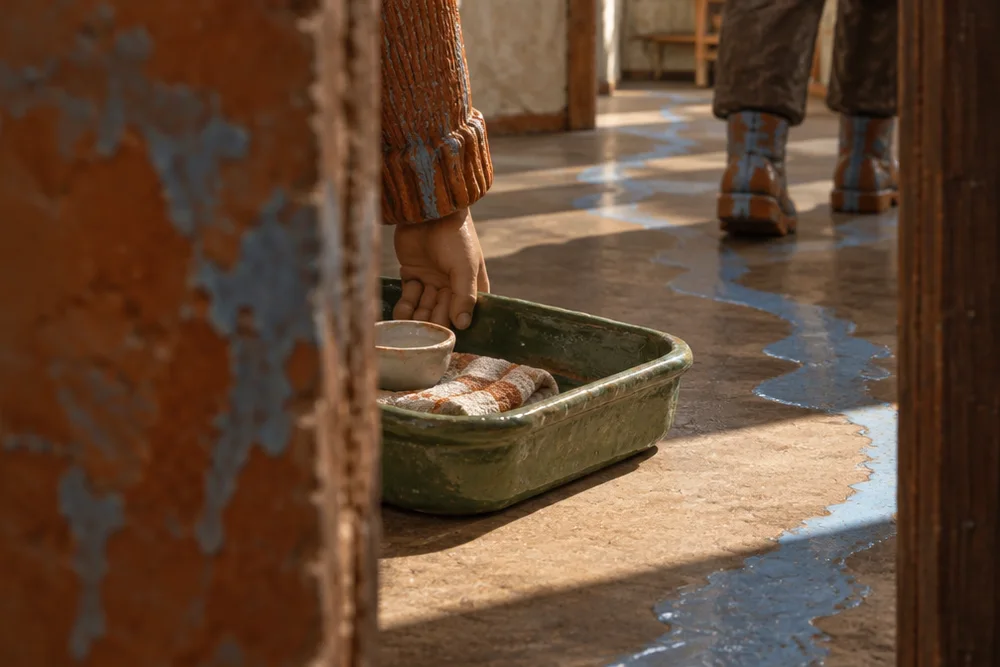
Vera shifted her grip. The tray’s weight was slight, but its soil dragged against the slats. “It may not need much. We’re testing whether a kitchen can hold them alive, not asking every household to become a nursery.”
“That distinction won’t keep a root from drying.” Bess’s voice was brisk, not cruel. “If it needs water, someone has to notice. If it doesn’t, someone still has to know that.”
At Sella’s door, the two women waited while a child unlatched it. Sella herself stood behind him in a soot-marked work shirt, hair wrapped tight against the kiln dust. She looked from Bess to Vera and down at the green leaves.
“I can take it,” she said. “My room stays cooler. I’ll put it away from the stove.”
“And when you’re asleep?” Bess asked.
“My daughter—”
“Don’t give her a job she hasn’t agreed to.”
The child had already leaned close to the tray. “I can look at it when I get home from lessons.”
Sella glanced at him. “You can look. You don’t water it unless one of us tells you.”
Bess nodded. “That’s a real handoff. How often do you cook?”
“After I wake. If I wake late, I buy from the free table.”
“Then we’ll mark your check before sleep and his after lessons. If one is missed, the next person doesn’t assume it was done.”
The pale-root tray went to a small kitchen on the crater floor, where a woman named Tavi made breakfast before carrying a meal pot to the orchard workers. Her cooking hours were the opposite of Sella’s: stove lit before first light, kitchen quiet by midmorning. Bess did not choose her because she had spare time. She chose her because the hours did not overlap with Sella’s, and because Tavi had agreed to leave the tray in a place where the soil would not be heated by the stove.
“It needs a cooler corner,” Tavi said, setting a folded cloth over the table before they placed the tray down. “But not behind the water jar. I keep that one full and it sweats.”
Vera checked the leaf tag, then the moisture at the tray’s edge. She resisted the urge to correct the angle of Tavi’s hands. “The paper says damp, not wet.”
“I know how to keep a pot alive.”
“A pot has a potter’s mark. This has a family name that matters to the orchard.”
Tavi’s eyes lifted from the soil. “And if I kill it?”
“Then we write that it died here, and how. We don’t call it a mistake you made and hide the tray.”