A Bowl for the Missing
Page 109 of 282
Chapters
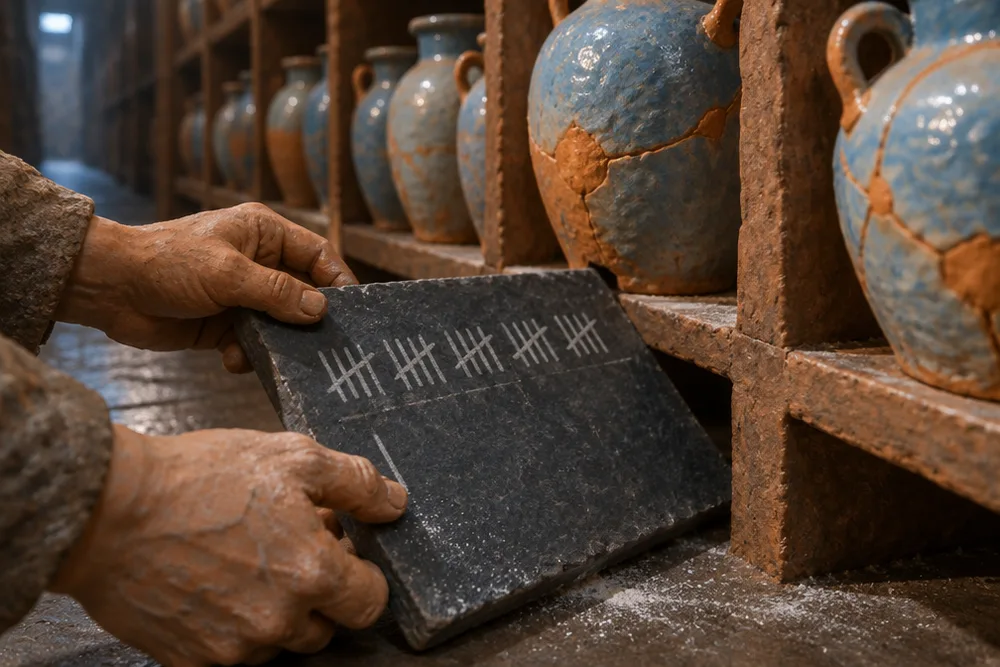
He drew a little hook where his count stopped. The woman borrowed the chalk and added a mark farther down the slate.
“That’s when the cart went,” she said. “You were still on the stair.”
Vera had been about to write *no change* beside the reading she’d taken after the cart left. She looked at the space on the rubbing. The phrase would have covered the moment she couldn’t see, as if standing at the dial afterward were the same as having been there all along. She wrote *at mark on return* instead.
“Keep that on your slate,” she said. “When I come down again, tell me what you saw before I tell you what the dial did.”
The woman gave her back the chalk. “Even if it’s nothing?”
“Especially then. I’ll want to know where you were looking.”
Vera carried the chalk up to the gallery and put it by the crank. It left a white grain in the crease of her finger. She rubbed her finger against her thumb and laid the service cards back in their drawer in the order she’d found them.
At the gallery table Vera spread the rubbing flat again. The marks she’d made from the dial were beginning to crowd the circle. She turned the paper over and drew the beam and the support beneath it. She put a line across both. If she drew those lines on wood and iron while both were still, she would not have to judge the travel solely from the needle. The beam could move a little and return; she would have to be close enough to see it happen without leaning on anything that carried the scale.
Below, chalk worked over slate in short strokes. Then it stopped. Vera waited for the small sounds that usually followed a finished count: a lid seated with the flat of a hand, a shelf jar nudged back against its neighbor. None came. She looked at the wooden tongue again. She could pull it clear without setting a shoulder against the beam. Putting it back might be harder. She went to the side of the bracket and held her hand open next to the polished end, judging how much room she would need to come straight back with it. There was room, provided she kept the crank out of her way.
She did not touch the wood. The workers were still counting what could be seen from the passage, and the light on the dial was changing. A bar from the gallery opening had stood across its glass while she aligned her eye with the pin. Now it fell short of the glass and lay on the casing. She could read the chalk better without it.