A Bell for the Way Back
Page 262 of 279
Chapters
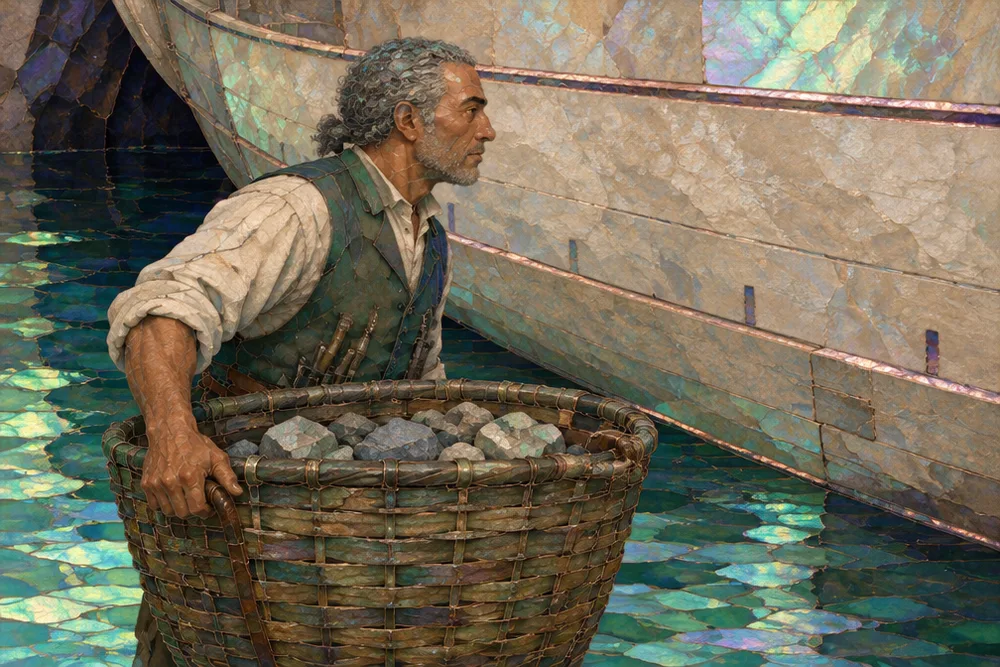
They kept the ballast aboard through the next rise. The cradle ropes slackened as the hull floated, then tightened when it drifted toward the ledge. Mett walked the line along the rail, keeping the stern from swinging. Zella stood where she could see both the heel and the water’s surface. Lio called each station mark as the hull rose.
A small twist appeared when the tide pressed the bow sideways. It was no more than a shift in the reflection, but Zella caught it. “Hold there.”
Mett braced the line. “I’ve got it.”
Zella compared the far and near marks. One had moved a finger-width. She did not reach for the hammer or the brace. The tide was applying force from one side; the hull needed to be tested against that, not corrected before they knew what it was doing.
“Let the line ease,” she said. “Slow.”
Mett let out rope. The hull slid with the water, then steadied. The shifted mark returned to its place. The joint had flexed within the wood's give and come back true. No plank edge lifted. The ballast did not roll.
Lio’s fingers hovered over the slate. “It’s back.”
“Write that down,” Zella said. “Not ‘perfect.’ Back.”
Lio scratched the note beside the mark. Her tongue showed briefly between her teeth as she worked. Zella recognized the concentration; she had seen it when Lio mapped roof routes through the village, each turn described by where a person could put a foot next.
The tide began to fall. They brought the hull close to the ledge and secured the lines without dragging the underside across stone. The ballast stones came out in reverse order. Zella checked the shoe from inside, then the outer plank runs. She found no gap, no split, no dark wet line traveling beyond the seam.
Mett lifted the basket. “You can call it a boat now.”
“I can call it a hull.”
“You have a stern, a bow, and it floats.”
“It also needs a rudder, a deck, and a hundred things I haven’t done.”
“A hundred and one, then.” He set the basket down. “You know what I mean.”
She did. He was not asking her to claim a finished boat. He was asking her to recognize what her hands had made. Zella looked along the pale planks, the indigo stations, and the visible crosswise shoe joint. She could see the work ahead without mistaking it for the work already done.
“It’s a hull,” she said. “And it’s mine to finish.”
Mett nodded, accepting the distinction. Lio added the words to the slate, beneath the note about the mark returning. She did not write perfect.