A Bell for the Way Back
Page 146 of 279
Chapters
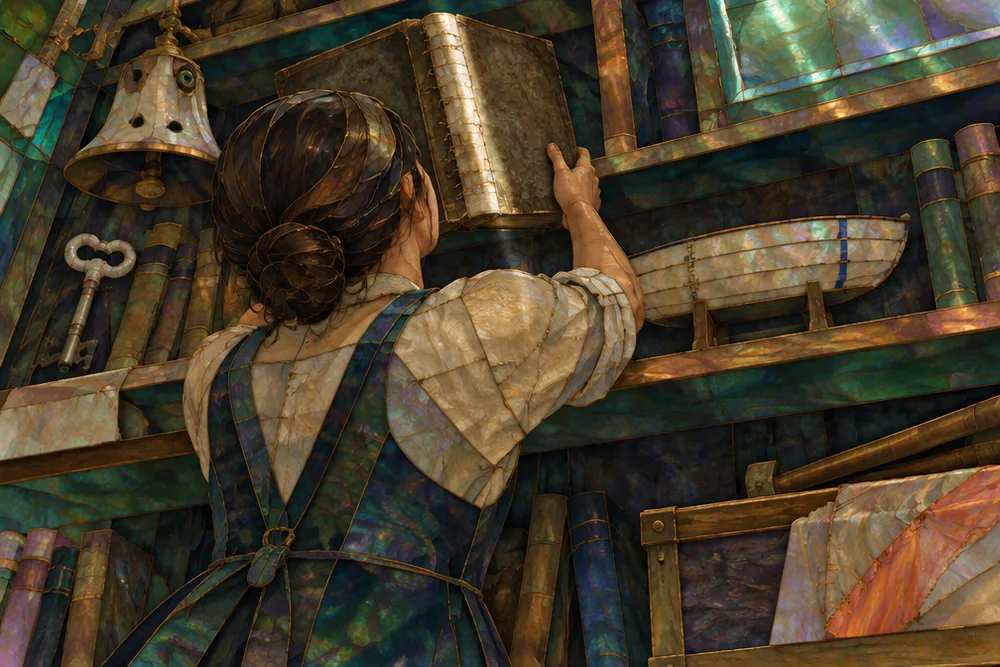
Orra took down the oldest register that had not been sent to the archive. Its binding had softened at the corners; the cover was patched with a strip of sailcloth. She set it on the counter with both hands, as if the weight inside might shift. Zella moved the plank aside to make room.
“The last Mudstep register,” Orra said. “Before the chart lists became the working lists.”
Zella opened the cover. The pages held small, close handwriting, rows of household names and door numbers, then measurements of sill height. A few entries had been crossed through in red pencil. The later columns were crowded with dates, figures, and the same winter-loan notation repeated in different hands.
“This is the version Mett saw?”
“He saw a copy. This is the office book.” Orra drew her finger down a column. “The village was recorded as a temporary tide settlement. The loan funded the dry strip for the slips. We renewed it each winter so the coast would have room to rebuild.”
“You told us it was a seasonal loan.”
“I believed that.” Orra’s voice had gone flat with concentration. “The machine’s route check was supposed to be renewed alongside it. The records were maintained separately.”
Zella turned a page. “And Mudstep?”
Orra found the old register’s last set of sill readings. She laid it beside the current lease book, whose pages showed workshops, sheds, and rooms cut from the same elevations. “Mudstep was measured as part of the route. The loan renewal form had a line for the release hour.”
“Did it happen?”
Orra did not speak. She pulled the register closer and began comparing columns.
Zella leaned in. In the old book, release hours had been entered in the margin beside the spring tides. Some were written in full; others were numbers followed by a clerk’s short mark. On the current forms, the same place in the row held a blank. Not a dash, not an omission explained in a note: a long, ruled space, ready for an hour that had never been filled in.
Orra fetched a stack of renewals from beneath the register. She lined them up by date and traced each forward. At first the handwriting varied. One clerk wrote the season in a cramped hand; another pressed so hard the nib had torn the sheet. The blank recurred in every version.
“They copied the form,” Zella said.
“They copied the previous form.”
“And the previous one copied the blank.”
Orra stopped with a finger on the oldest renewal. “Yes.”