A Bell Beneath the Silt
Page 238 of 245
Chapters
Anwen looked toward the far shore. The ferry waited at the landing, its painted hull bright where the new coat had not yet weathered. The name on the brass plate still belonged to its owner. Her own name was painted on the shift board in the control hut, beside the days she worked. At the end of each month, the owner paid her a wage and trusted her with the keys. That was not what she had wanted at the beginning. It was not nothing.
The lost ferry had been a family boat, with the old haul rope aboard when the creditor took it. For a while Anwen had thought of that rope as a thing stolen from her twice: first with the hull, then by the choice to use it for the incline rather than for a return to the landing. She had watched the old boat sold to someone else, and had gone back for the pin that helped repair the sled. The pin still held. The incline still carried people.
“You’re watching the boat,” Ione said, coming to stand beside her.
“I’m watching the landing.”
“Those are not the same thing.”
Anwen glanced at her. “No.”
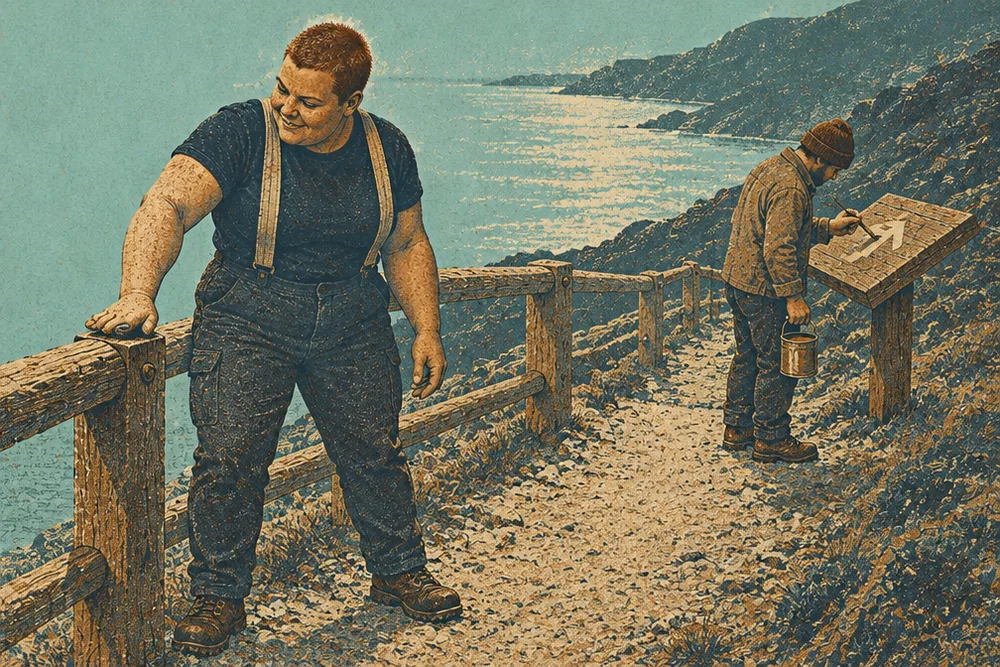
Below them, Bera was checking a handrail bolt with the heel of her palm. One of the crew had brought a tin of ochre paint and was touching up the letters on the footpath board. The crew had worked through the season after the salvage job ended—not every day, not without pay when wages were due, but often enough that the route had become everyone’s concern. They had built a schedule and divided the work; nobody was asked to live on promises.
“It’s holding,” Ione said.
“It should.”
“You always say that when you are hoping.”
“Hope doesn’t tighten bolts,” Anwen said.
“No. But it makes you check them.” Ione folded her hands inside her sleeves. “We have to decide how we want the next drawdown handled.”
The word next sat between them. Each season, the reservoir would fall. The drowned village would show itself again, and the bell tower’s roofless stump would stand out of the mud. Families would come to the water’s edge. Some would want to reclaim remains; some would prefer to leave the graves untouched. Others might not yet know what they wanted. No schedule could settle those questions for them.
“We’ll open the path before the water drops far enough to uncover the old road,” Anwen said. “Nell can mark the changing level. We’ll set a gate at the gully and keep it shut during work. No diversion without a walkable route and someone watching the water.”